Readings Newsletter
Become a Readings Member to make your shopping experience even easier.
Sign in or sign up for free!
You’re not far away from qualifying for FREE standard shipping within Australia
You’ve qualified for FREE standard shipping within Australia
The cart is loading…


This title is printed to order. This book may have been self-published. If so, we cannot guarantee the quality of the content. In the main most books will have gone through the editing process however some may not. We therefore suggest that you be aware of this before ordering this book. If in doubt check either the author or publisher’s details as we are unable to accept any returns unless they are faulty. Please contact us if you have any questions.
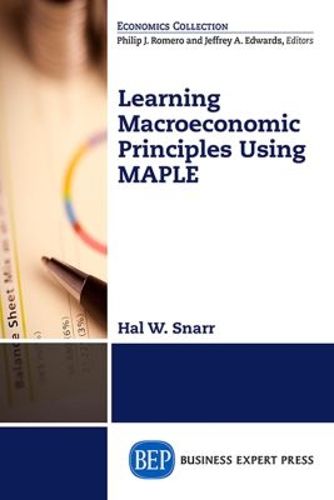
Nearly all of us participate in the labor market. Persons who are 16 years old or older and not in the armed forces are in the labor market if they work at least one hour a week for pay or 15 hours for no pay in family businesses, or are unemployed and looking for work. So workers include teenagers doing farm chores, dishwashers, unemployed veterans, mechanics, gas station clerks, high school teachers, tire salespersons, professors, and, yes, CEOs. Each supplies labor that is demanded by firms to make products valued by consumers. Although government’s primary function was initially limited to protecting an individual’s rights to life, liberty, and property, today it has taken on a more interventionist role. According to some (normativists), government should do more to improve the lives of America’s working poor like raise the minimum wage or close the border. In a world of constants, such policy can benefit those most in need. The world we live in, however, is dynamic and uncertain. Others (positivists) point out the unintended consequences of well-intentioned policy. Fortunately or not, interventionism is the rule not the exception because our world is somewhat ill-informed on these and many other issues of interest to business owners, managers, and labor economists. This book teaches business leaders, managers, policy makers, and others who haven’t been formally trained in labor economics to understand this discipline. By incorporating clear graphs and non-technical language, the book explores various government policy decisions made on behalf of labor and the consequences of those decisions. The book begins with an accessible, concise, and thorough development of labor supply and demand. The book then explores the tradeoff(s) between the economic efficiency of free markets and government equity interventions including anti-poverty policy, migration, unionization, discrimination, and education.
$9.00 standard shipping within Australia
FREE standard shipping within Australia for orders over $100.00
Express & International shipping calculated at checkout
Stock availability can be subject to change without notice. We recommend calling the shop or contacting our online team to check availability of low stock items. Please see our Shopping Online page for more details.
This title is printed to order. This book may have been self-published. If so, we cannot guarantee the quality of the content. In the main most books will have gone through the editing process however some may not. We therefore suggest that you be aware of this before ordering this book. If in doubt check either the author or publisher’s details as we are unable to accept any returns unless they are faulty. Please contact us if you have any questions.
Nearly all of us participate in the labor market. Persons who are 16 years old or older and not in the armed forces are in the labor market if they work at least one hour a week for pay or 15 hours for no pay in family businesses, or are unemployed and looking for work. So workers include teenagers doing farm chores, dishwashers, unemployed veterans, mechanics, gas station clerks, high school teachers, tire salespersons, professors, and, yes, CEOs. Each supplies labor that is demanded by firms to make products valued by consumers. Although government’s primary function was initially limited to protecting an individual’s rights to life, liberty, and property, today it has taken on a more interventionist role. According to some (normativists), government should do more to improve the lives of America’s working poor like raise the minimum wage or close the border. In a world of constants, such policy can benefit those most in need. The world we live in, however, is dynamic and uncertain. Others (positivists) point out the unintended consequences of well-intentioned policy. Fortunately or not, interventionism is the rule not the exception because our world is somewhat ill-informed on these and many other issues of interest to business owners, managers, and labor economists. This book teaches business leaders, managers, policy makers, and others who haven’t been formally trained in labor economics to understand this discipline. By incorporating clear graphs and non-technical language, the book explores various government policy decisions made on behalf of labor and the consequences of those decisions. The book begins with an accessible, concise, and thorough development of labor supply and demand. The book then explores the tradeoff(s) between the economic efficiency of free markets and government equity interventions including anti-poverty policy, migration, unionization, discrimination, and education.
Search our extensive online catalogue.
