Readings Newsletter
Become a Readings Member to make your shopping experience even easier.
Sign in or sign up for free!
You’re not far away from qualifying for FREE standard shipping within Australia
You’ve qualified for FREE standard shipping within Australia
The cart is loading…


This title is printed to order. This book may have been self-published. If so, we cannot guarantee the quality of the content. In the main most books will have gone through the editing process however some may not. We therefore suggest that you be aware of this before ordering this book. If in doubt check either the author or publisher’s details as we are unable to accept any returns unless they are faulty. Please contact us if you have any questions.
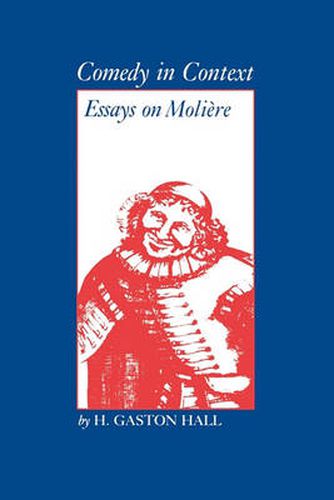
This book brings together a dozen essays devoted to aspects of Moliere’s stagecraft, each of which illustrates in its ways Hall’s thesis of comedy in context. It is only in later generations that some knowledge of Moliere has become part of French popular culture through universal education, for in his own time Moliere’s art did not reach even the vast majority of Frenchmen. This new volume of essays thus complements other studies of the comedies by focusing attention on an even larger audience upon the plays as Hall believes the playwright conceived them. The first seven essays considers questions and themes common to a number of Moliere’s plays, and the last five deal with individual comedies in the order in which they were originally published: L'Ecole des femmes, Tartuffe, Dom Juan, and Le Misanthrope. All the essays convey the author’s conviction that Moliere was a writer of comedies which can be properly understood only in the historical and literary context in which they were imagined, written, performed, and published. For Hall, the historical context of the comedies is clearly a reflection of Moliere’s activities as an actor-manager of his own comedy company as well as a reflection of social conditions of seventeenth century France. In addition, Hall shows the rich literary context of the plays by discussing the resources of literary works and of authors that provided subjects for Moliere. Through a close analysis of the text, Hall establishes historical and literary bases for the plays and gives them new direction and meaning.
$9.00 standard shipping within Australia
FREE standard shipping within Australia for orders over $100.00
Express & International shipping calculated at checkout
Stock availability can be subject to change without notice. We recommend calling the shop or contacting our online team to check availability of low stock items. Please see our Shopping Online page for more details.
This title is printed to order. This book may have been self-published. If so, we cannot guarantee the quality of the content. In the main most books will have gone through the editing process however some may not. We therefore suggest that you be aware of this before ordering this book. If in doubt check either the author or publisher’s details as we are unable to accept any returns unless they are faulty. Please contact us if you have any questions.
This book brings together a dozen essays devoted to aspects of Moliere’s stagecraft, each of which illustrates in its ways Hall’s thesis of comedy in context. It is only in later generations that some knowledge of Moliere has become part of French popular culture through universal education, for in his own time Moliere’s art did not reach even the vast majority of Frenchmen. This new volume of essays thus complements other studies of the comedies by focusing attention on an even larger audience upon the plays as Hall believes the playwright conceived them. The first seven essays considers questions and themes common to a number of Moliere’s plays, and the last five deal with individual comedies in the order in which they were originally published: L'Ecole des femmes, Tartuffe, Dom Juan, and Le Misanthrope. All the essays convey the author’s conviction that Moliere was a writer of comedies which can be properly understood only in the historical and literary context in which they were imagined, written, performed, and published. For Hall, the historical context of the comedies is clearly a reflection of Moliere’s activities as an actor-manager of his own comedy company as well as a reflection of social conditions of seventeenth century France. In addition, Hall shows the rich literary context of the plays by discussing the resources of literary works and of authors that provided subjects for Moliere. Through a close analysis of the text, Hall establishes historical and literary bases for the plays and gives them new direction and meaning.
Search our extensive online catalogue.
