Readings Newsletter
Become a Readings Member to make your shopping experience even easier.
Sign in or sign up for free!
You’re not far away from qualifying for FREE standard shipping within Australia
You’ve qualified for FREE standard shipping within Australia
The cart is loading…


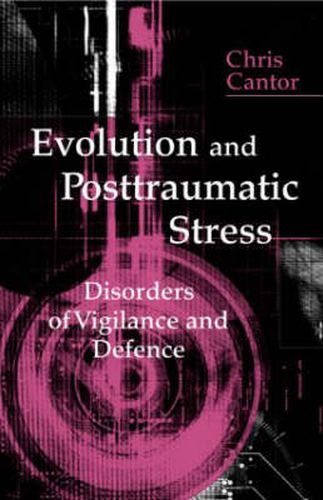
Posttraumatic Stress Disorder remains one of the most contentious and poorly understood psychiatric disorders. Evolution and Posttraumatic Stress provides a valuable new perspective on its nature and causes. This book is the first to examine PTSD from an evolutionary perspective. Beginning with a review of conventional theories, Chris Cantor provides a clear and succinct overview of the history, clinical features and epidemiology of PTSD before going on to introduce and integrate evolutionary theory. Subjects discussed include: The evolution of human defensive behaviours A clinical perspective of PTSD Defence in overdrive: evolution, PTSD and parsimony This original presentation of PTSD as a defensive strategy describes how the use of evolutionary theory provides a more coherent and successful model for diagnosis, greatly improving understanding of usually mystifying symptoms. It will be of great interest to psychiatrists, psychotherapists, psychologists, anthropologists.
$9.00 standard shipping within Australia
FREE standard shipping within Australia for orders over $100.00
Express & International shipping calculated at checkout
Stock availability can be subject to change without notice. We recommend calling the shop or contacting our online team to check availability of low stock items. Please see our Shopping Online page for more details.
Posttraumatic Stress Disorder remains one of the most contentious and poorly understood psychiatric disorders. Evolution and Posttraumatic Stress provides a valuable new perspective on its nature and causes. This book is the first to examine PTSD from an evolutionary perspective. Beginning with a review of conventional theories, Chris Cantor provides a clear and succinct overview of the history, clinical features and epidemiology of PTSD before going on to introduce and integrate evolutionary theory. Subjects discussed include: The evolution of human defensive behaviours A clinical perspective of PTSD Defence in overdrive: evolution, PTSD and parsimony This original presentation of PTSD as a defensive strategy describes how the use of evolutionary theory provides a more coherent and successful model for diagnosis, greatly improving understanding of usually mystifying symptoms. It will be of great interest to psychiatrists, psychotherapists, psychologists, anthropologists.
Search our extensive online catalogue.
