Readings Newsletter
Become a Readings Member to make your shopping experience even easier.
Sign in or sign up for free!
You’re not far away from qualifying for FREE standard shipping within Australia
You’ve qualified for FREE standard shipping within Australia
The cart is loading…


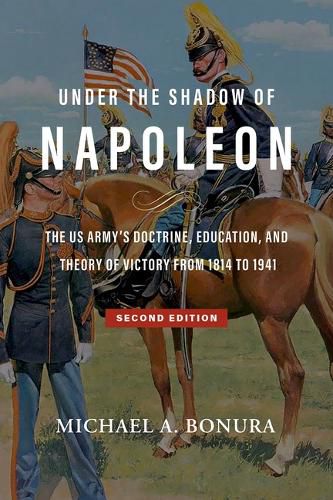
The way an army understands warfare and how to achieve victory on the battlefield has a tremendous impact on its organization, equipment, training, and doctrine. The central ideas of that understanding form an army's Theory of Victory, which informs how that army fights. From the disasters of the War of 1812, Winfield Scott ensured that America adopted a series of ideas formed in the crucible of the French Revolution and perfected by Napoleon Bonaparte as the United States Army's Theory of Victory. These French ideas dominated American warfare on the battlefields of the Mexican-American War, the American Civil War, the Spanish-American War, and World War I.
The American Army remained committed to these ideas until the successes of German blitzkrieg led George C. Marshall to orchestrate the adoption of a different set of ideas that formed a different Theory of Victory in 1940. The US Army's cycle of adopting a Theory of Victory, perfecting it, and replacing it strongly mirrored the cycle of the scientific paradigm outlined by Thomas Kuhn. The French influence in this period is remarkably consistent throughout the Army regulations and doctrine and officer education at West Point, Fort Leavenworth, the Army War College, and on American battlefields across the globe. Understanding the French ideas that dominated American warfare provides a new context to the military actions, policies, and decisions from 1814 through 1941. That new context informs more accurate analyses and helps provide more satisfying answers to the questions of American military history.
This second edition is updated from the first edition of 2012 with a significant expansion of primary sources from the curriculum of the Command and General Staff College at Fort Leavenworth. Michael A. Bonura offers new analysis of how the Theory of Victory was adopted, refined, and replaced, which will inform both the study of such transitions and the attempt to do so in the future.
$9.00 standard shipping within Australia
FREE standard shipping within Australia for orders over $100.00
Express & International shipping calculated at checkout
Stock availability can be subject to change without notice. We recommend calling the shop or contacting our online team to check availability of low stock items. Please see our Shopping Online page for more details.
The way an army understands warfare and how to achieve victory on the battlefield has a tremendous impact on its organization, equipment, training, and doctrine. The central ideas of that understanding form an army's Theory of Victory, which informs how that army fights. From the disasters of the War of 1812, Winfield Scott ensured that America adopted a series of ideas formed in the crucible of the French Revolution and perfected by Napoleon Bonaparte as the United States Army's Theory of Victory. These French ideas dominated American warfare on the battlefields of the Mexican-American War, the American Civil War, the Spanish-American War, and World War I.
The American Army remained committed to these ideas until the successes of German blitzkrieg led George C. Marshall to orchestrate the adoption of a different set of ideas that formed a different Theory of Victory in 1940. The US Army's cycle of adopting a Theory of Victory, perfecting it, and replacing it strongly mirrored the cycle of the scientific paradigm outlined by Thomas Kuhn. The French influence in this period is remarkably consistent throughout the Army regulations and doctrine and officer education at West Point, Fort Leavenworth, the Army War College, and on American battlefields across the globe. Understanding the French ideas that dominated American warfare provides a new context to the military actions, policies, and decisions from 1814 through 1941. That new context informs more accurate analyses and helps provide more satisfying answers to the questions of American military history.
This second edition is updated from the first edition of 2012 with a significant expansion of primary sources from the curriculum of the Command and General Staff College at Fort Leavenworth. Michael A. Bonura offers new analysis of how the Theory of Victory was adopted, refined, and replaced, which will inform both the study of such transitions and the attempt to do so in the future.
Search our extensive online catalogue.
