Readings Newsletter
Become a Readings Member to make your shopping experience even easier.
Sign in or sign up for free!
You’re not far away from qualifying for FREE standard shipping within Australia
You’ve qualified for FREE standard shipping within Australia
The cart is loading…


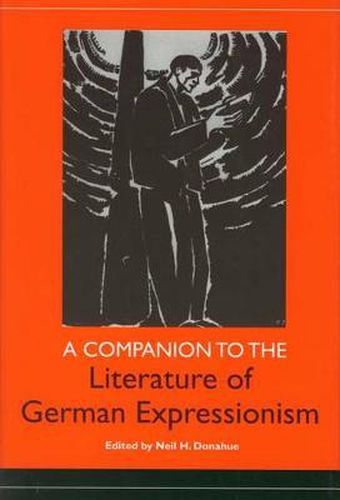
More than any other avant-garde movement, German Expressionism captures the aesthetic revolution of 20th-century modernity in all its contrasts and conflicts. In continuous eruptions from 1905 to 1925, Expressionism upset reigningpractices in the arts, most vividly in painting and the visual arts. In the literature, a heady intellectualism combined with dramatic gesture, graphic visions, exuberant emotions and urgent proclamations to forge forceful stylesof verbal expression. Expressionism introduced into art both visual and verbal a shockingly new intensity with many facets and many faces. This volume presents the literature of German Expressionism, which is far less known in the English-speaking world, with essays by leading scholars on Expressionism’s philosophical origins, its thematic preoccupations, and its divergent stylistic manifestations by writers whose common bond is intensity and whose lineson the page read like the gouges of a woodcut: Georg Kaiser, Walter Hasenclever, and Ernst Toller in drama; Gottfried Benn, Georg Heym, Else Lasker-Schuler, and Georg Trakl in poetry; Alfred Doeblin, Carl Einstein, and Carl Sternheim in prose, to name just a few. Against the background of the journals, exhibitions, and anthologies, the cafe meeting places and public life of Expressionism, the volume’s highly focused, intrinsic analyses of texts and comprehensive overviews of extrinsic contexts (and of the most up-to-date research) shows the fervor and complexity of the period and its effulgent literary formations.
Neil H. Donahue is Professor of German and Comparative Literature at Hofstra University.
$9.00 standard shipping within Australia
FREE standard shipping within Australia for orders over $100.00
Express & International shipping calculated at checkout
Stock availability can be subject to change without notice. We recommend calling the shop or contacting our online team to check availability of low stock items. Please see our Shopping Online page for more details.
More than any other avant-garde movement, German Expressionism captures the aesthetic revolution of 20th-century modernity in all its contrasts and conflicts. In continuous eruptions from 1905 to 1925, Expressionism upset reigningpractices in the arts, most vividly in painting and the visual arts. In the literature, a heady intellectualism combined with dramatic gesture, graphic visions, exuberant emotions and urgent proclamations to forge forceful stylesof verbal expression. Expressionism introduced into art both visual and verbal a shockingly new intensity with many facets and many faces. This volume presents the literature of German Expressionism, which is far less known in the English-speaking world, with essays by leading scholars on Expressionism’s philosophical origins, its thematic preoccupations, and its divergent stylistic manifestations by writers whose common bond is intensity and whose lineson the page read like the gouges of a woodcut: Georg Kaiser, Walter Hasenclever, and Ernst Toller in drama; Gottfried Benn, Georg Heym, Else Lasker-Schuler, and Georg Trakl in poetry; Alfred Doeblin, Carl Einstein, and Carl Sternheim in prose, to name just a few. Against the background of the journals, exhibitions, and anthologies, the cafe meeting places and public life of Expressionism, the volume’s highly focused, intrinsic analyses of texts and comprehensive overviews of extrinsic contexts (and of the most up-to-date research) shows the fervor and complexity of the period and its effulgent literary formations.
Neil H. Donahue is Professor of German and Comparative Literature at Hofstra University.
Search our extensive online catalogue.
