Readings Newsletter
Become a Readings Member to make your shopping experience even easier.
Sign in or sign up for free!
You’re not far away from qualifying for FREE standard shipping within Australia
You’ve qualified for FREE standard shipping within Australia
The cart is loading…


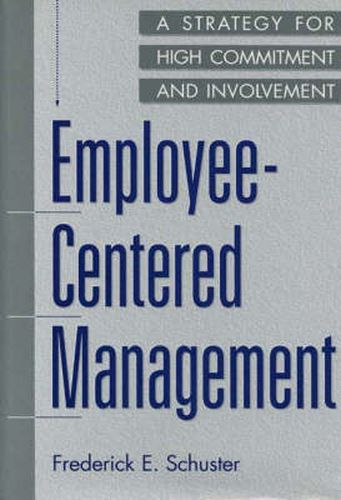
As evidence builds that the Theory Y model of management, built on commitment and involvement, is far more successful in the workplace than the bureaucratic and authoritarian Theory X model, organizations seek new and more specific guidance in how to reinvent themselves into the Theory Y mode. Schuster outlines a step-by-step process to transform management theory into practice–he calls it Strategy A. As proof that the process works, he describes one firm’s five-year-long intervention, in which Strategy A was applied with dramatic success. Other examples of Strategy A’s successes are recounted here: how it worked in companies like Hewlett-Packard, IBM, Disney, and elsewhere. Executives in the private and public sectors will find this a necessary resource to help them guide their organizations into this newly appreciated management style, while their academic colleagues will find new ways to communicate to their students its impressive benefits. Part I delineates the foundation and definition of Strategy A. Chapter 1 describes organization culture and why it is an important determinant in organization performance. Schuster then explains the urgency of devising methods for improving productivity and competitiveness, summarizes results from his study of Fortune 1300 largest companies, and introduces Strategy A as an intervention process. Reviewing the work of other researchers, Schuster examines several successful contemporary American firms utilizing Strategy A, and then presents the results of his own research of one particular firm’s performance. In Part II Schuster examines the principal steps in the application of Strategy A, discusses their rationale, and shows how other American firms have benefited from them.
$9.00 standard shipping within Australia
FREE standard shipping within Australia for orders over $100.00
Express & International shipping calculated at checkout
Stock availability can be subject to change without notice. We recommend calling the shop or contacting our online team to check availability of low stock items. Please see our Shopping Online page for more details.
As evidence builds that the Theory Y model of management, built on commitment and involvement, is far more successful in the workplace than the bureaucratic and authoritarian Theory X model, organizations seek new and more specific guidance in how to reinvent themselves into the Theory Y mode. Schuster outlines a step-by-step process to transform management theory into practice–he calls it Strategy A. As proof that the process works, he describes one firm’s five-year-long intervention, in which Strategy A was applied with dramatic success. Other examples of Strategy A’s successes are recounted here: how it worked in companies like Hewlett-Packard, IBM, Disney, and elsewhere. Executives in the private and public sectors will find this a necessary resource to help them guide their organizations into this newly appreciated management style, while their academic colleagues will find new ways to communicate to their students its impressive benefits. Part I delineates the foundation and definition of Strategy A. Chapter 1 describes organization culture and why it is an important determinant in organization performance. Schuster then explains the urgency of devising methods for improving productivity and competitiveness, summarizes results from his study of Fortune 1300 largest companies, and introduces Strategy A as an intervention process. Reviewing the work of other researchers, Schuster examines several successful contemporary American firms utilizing Strategy A, and then presents the results of his own research of one particular firm’s performance. In Part II Schuster examines the principal steps in the application of Strategy A, discusses their rationale, and shows how other American firms have benefited from them.
Search our extensive online catalogue.
