Readings Newsletter
Become a Readings Member to make your shopping experience even easier.
Sign in or sign up for free!
You’re not far away from qualifying for FREE standard shipping within Australia
You’ve qualified for FREE standard shipping within Australia
The cart is loading…


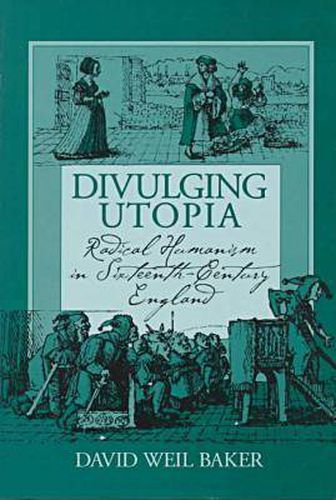
A study in intellectual history and the history of the book, this work examines the humanist movement in sixteenth-century England and traces the reception of a single work, Sir Thomas More’s Utopia (1516), in relation to that movement. Scrutinizing translations, popularizations, anti-Utopias, and theological debates, David Weil Baker makes the case that the humanists of the English Renaissance were themselves reading More’s Utopia, Erasmus’s Praise of Folly, and other works of Continental humanism in far more politically radical ways than scholars have generally recognized. In particular, during the Reformation and the later controversies to which it gave rise, Utopia became a code word for the goals of Protestant extremists, including the dreaded Anabaptists. More broadly, the communism of More’s imagined society became associated with the Protestant use of the printing press to disseminate vernacular editions of the Bible and other crucial religious texts and to make this formerly restricted interpretive property available to a broader readership.
$9.00 standard shipping within Australia
FREE standard shipping within Australia for orders over $100.00
Express & International shipping calculated at checkout
Stock availability can be subject to change without notice. We recommend calling the shop or contacting our online team to check availability of low stock items. Please see our Shopping Online page for more details.
A study in intellectual history and the history of the book, this work examines the humanist movement in sixteenth-century England and traces the reception of a single work, Sir Thomas More’s Utopia (1516), in relation to that movement. Scrutinizing translations, popularizations, anti-Utopias, and theological debates, David Weil Baker makes the case that the humanists of the English Renaissance were themselves reading More’s Utopia, Erasmus’s Praise of Folly, and other works of Continental humanism in far more politically radical ways than scholars have generally recognized. In particular, during the Reformation and the later controversies to which it gave rise, Utopia became a code word for the goals of Protestant extremists, including the dreaded Anabaptists. More broadly, the communism of More’s imagined society became associated with the Protestant use of the printing press to disseminate vernacular editions of the Bible and other crucial religious texts and to make this formerly restricted interpretive property available to a broader readership.
Search our extensive online catalogue.
