Readings Newsletter
Become a Readings Member to make your shopping experience even easier.
Sign in or sign up for free!
You’re not far away from qualifying for FREE standard shipping within Australia
You’ve qualified for FREE standard shipping within Australia
The cart is loading…


This title is printed to order. This book may have been self-published. If so, we cannot guarantee the quality of the content. In the main most books will have gone through the editing process however some may not. We therefore suggest that you be aware of this before ordering this book. If in doubt check either the author or publisher’s details as we are unable to accept any returns unless they are faulty. Please contact us if you have any questions.
The extreme greatness of Christianity lies in the fact that it does not seek a supernatural remedy for suffering, but a supernatural use for it. -Simone Weil
Like most people I, too, have been blindsided by personal grief now and again over the years. And I have an increasingly keen sense that, wherever I am, someone nearby is suffering now. For that reason, I lately have settled in to mull the matter over, gathering my troubled wits to undertake a difficult essay, more like what we used to call an assay, really-an earnest inquiry. I am thinking of it just now as a study in suffering, by which I hope to find some sense in affliction, hoping-just as I have come to hope about experience in general-to make something of it. -from the book
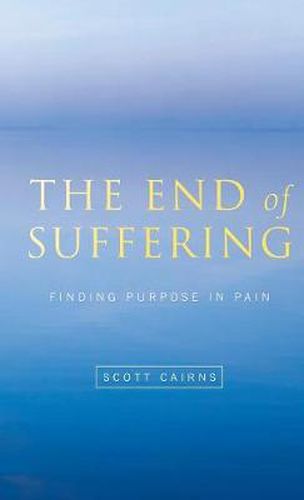
Is there meaning in our afflictions? With the thoughtfulness of a pilgrim and the prose of a poet, Scott Cairns takes us on a soul-baring journey through the puzzlement of our afflictions. Probing ancient Christian wisdom for revelation in his own pain, Cairns challenges us toward a radical revision of the full meaning and breadth of human suffering. Clear-eyed and unsparingly honest, this new addition to the literature of suffering is reminiscent of The Year of Magical Thinking as well as the works of C. S. Lewis. Cairns points us toward hope in the seasons of our afflictions, because in those trials in our lives that we do not choose but press through-a stillness, a calm, and a hope become available to us.
$9.00 standard shipping within Australia
FREE standard shipping within Australia for orders over $100.00
Express & International shipping calculated at checkout
Stock availability can be subject to change without notice. We recommend calling the shop or contacting our online team to check availability of low stock items. Please see our Shopping Online page for more details.
This title is printed to order. This book may have been self-published. If so, we cannot guarantee the quality of the content. In the main most books will have gone through the editing process however some may not. We therefore suggest that you be aware of this before ordering this book. If in doubt check either the author or publisher’s details as we are unable to accept any returns unless they are faulty. Please contact us if you have any questions.
The extreme greatness of Christianity lies in the fact that it does not seek a supernatural remedy for suffering, but a supernatural use for it. -Simone Weil
Like most people I, too, have been blindsided by personal grief now and again over the years. And I have an increasingly keen sense that, wherever I am, someone nearby is suffering now. For that reason, I lately have settled in to mull the matter over, gathering my troubled wits to undertake a difficult essay, more like what we used to call an assay, really-an earnest inquiry. I am thinking of it just now as a study in suffering, by which I hope to find some sense in affliction, hoping-just as I have come to hope about experience in general-to make something of it. -from the book
Is there meaning in our afflictions? With the thoughtfulness of a pilgrim and the prose of a poet, Scott Cairns takes us on a soul-baring journey through the puzzlement of our afflictions. Probing ancient Christian wisdom for revelation in his own pain, Cairns challenges us toward a radical revision of the full meaning and breadth of human suffering. Clear-eyed and unsparingly honest, this new addition to the literature of suffering is reminiscent of The Year of Magical Thinking as well as the works of C. S. Lewis. Cairns points us toward hope in the seasons of our afflictions, because in those trials in our lives that we do not choose but press through-a stillness, a calm, and a hope become available to us.
Search our extensive online catalogue.
