Readings Newsletter
Become a Readings Member to make your shopping experience even easier.
Sign in or sign up for free!
You’re not far away from qualifying for FREE standard shipping within Australia
You’ve qualified for FREE standard shipping within Australia
The cart is loading…


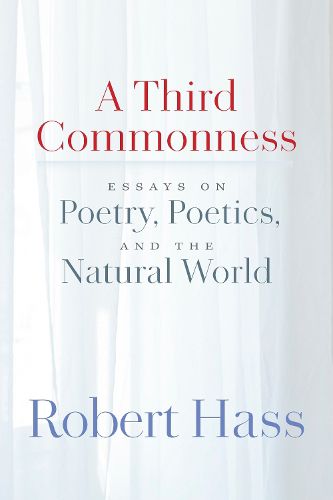
Pulitzer Prize winner Robert Hass explores poetry for what it is: a relationship between people and the land.
In A Third Commonness, US Poet Laureate Robert Hass follows a literary river through time and topography-from Zen Buddhism to California ecopoetics, from Barry Lopez to Walt Whitman, and even through an unlikely fellowship between Kentucky poet-priests. Told through essays and lectures, A Third Commonness is as much a love letter to landscape as it is a sprawling exploration of poetic heritage. Hass weaves histories with the boundless hand of a passionate reader inseparable from literary vitality. Hass revels at genius, saying, Here it is, this stretch of it. Sometimes with a requiem, other times with romance or political reckoning, Hass returns to the amazements of a poetry that encounters itself over and again, beckoned into being by some "propelling force."
$9.00 standard shipping within Australia
FREE standard shipping within Australia for orders over $100.00
Express & International shipping calculated at checkout
Stock availability can be subject to change without notice. We recommend calling the shop or contacting our online team to check availability of low stock items. Please see our Shopping Online page for more details.
Pulitzer Prize winner Robert Hass explores poetry for what it is: a relationship between people and the land.
In A Third Commonness, US Poet Laureate Robert Hass follows a literary river through time and topography-from Zen Buddhism to California ecopoetics, from Barry Lopez to Walt Whitman, and even through an unlikely fellowship between Kentucky poet-priests. Told through essays and lectures, A Third Commonness is as much a love letter to landscape as it is a sprawling exploration of poetic heritage. Hass weaves histories with the boundless hand of a passionate reader inseparable from literary vitality. Hass revels at genius, saying, Here it is, this stretch of it. Sometimes with a requiem, other times with romance or political reckoning, Hass returns to the amazements of a poetry that encounters itself over and again, beckoned into being by some "propelling force."
Search our extensive online catalogue.
