Readings Newsletter
Become a Readings Member to make your shopping experience even easier.
Sign in or sign up for free!
You’re not far away from qualifying for FREE standard shipping within Australia
You’ve qualified for FREE standard shipping within Australia
The cart is loading…


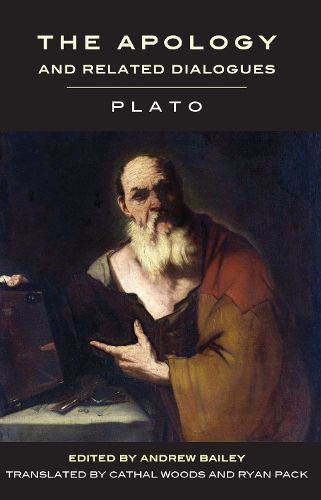
Socrates, one of the first of the great philosophers, left no written works. What survives of his thought are second-hand descriptions of his teachings and conversations-including, most famously, the accounts of his trial and execution composed by his friend, student, and philosophical successor, Plato. In Euthyphro, Socrates examines the concept of piety and displays his propensity for questioning Athenian authorities. Such audacity is not without consequence, and in the Apology we find Socrates defending himself in court against charges of impiety and corruption of the youth. Crito depicts Socrates choosing to accept the resulting death sentence rather than escape Athens and avoid execution. All three dialogues are included here, as is the final scene of Phaedo, in which the sentence is carried out.
$9.00 standard shipping within Australia
FREE standard shipping within Australia for orders over $100.00
Express & International shipping calculated at checkout
Stock availability can be subject to change without notice. We recommend calling the shop or contacting our online team to check availability of low stock items. Please see our Shopping Online page for more details.
Socrates, one of the first of the great philosophers, left no written works. What survives of his thought are second-hand descriptions of his teachings and conversations-including, most famously, the accounts of his trial and execution composed by his friend, student, and philosophical successor, Plato. In Euthyphro, Socrates examines the concept of piety and displays his propensity for questioning Athenian authorities. Such audacity is not without consequence, and in the Apology we find Socrates defending himself in court against charges of impiety and corruption of the youth. Crito depicts Socrates choosing to accept the resulting death sentence rather than escape Athens and avoid execution. All three dialogues are included here, as is the final scene of Phaedo, in which the sentence is carried out.
Search our extensive online catalogue.
