Readings Newsletter
Become a Readings Member to make your shopping experience even easier.
Sign in or sign up for free!
You’re not far away from qualifying for FREE standard shipping within Australia
You’ve qualified for FREE standard shipping within Australia
The cart is loading…


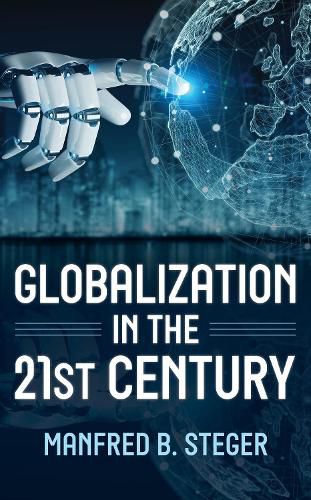
The fate of globalization in the 21st century hangs in the balance. Although recent data show that most global integration has been on the rebound after the 2008-9 global financial meltdown and the COVID-19 pandemic, public sentiments about globalization have soured. The neoliberal glorification of globalization as beneficial market integration is running out of steam, while national-populist visions of "deglobalization" exert significant mass appeal. Today's ostensible globalization backlash scenario seems to be confirmed by soaring inflation rates, global supply chain disruptions, accelerating climate change and ecological deterioration, lagging transitions to greener forms of energy, escalating economic inequality, and rising geopolitical competition among the Great Powers, especially the United States-China rivalry and the protracted Russian-Ukrainian war. On the flipside, however, such grim scenarios reinforce the fact that most of today's problems are global in nature. This book provides an accessible assessment of 21st-century globalization that draws on global theory and history to engage pressing issues such as digitization, ideological polarization, higher education, demographics, human development, and the environment. Assembling such a big picture of globalization in this young century supports the practical efforts of setting the globe on a more equitable and sustainable path.
$9.00 standard shipping within Australia
FREE standard shipping within Australia for orders over $100.00
Express & International shipping calculated at checkout
Stock availability can be subject to change without notice. We recommend calling the shop or contacting our online team to check availability of low stock items. Please see our Shopping Online page for more details.
The fate of globalization in the 21st century hangs in the balance. Although recent data show that most global integration has been on the rebound after the 2008-9 global financial meltdown and the COVID-19 pandemic, public sentiments about globalization have soured. The neoliberal glorification of globalization as beneficial market integration is running out of steam, while national-populist visions of "deglobalization" exert significant mass appeal. Today's ostensible globalization backlash scenario seems to be confirmed by soaring inflation rates, global supply chain disruptions, accelerating climate change and ecological deterioration, lagging transitions to greener forms of energy, escalating economic inequality, and rising geopolitical competition among the Great Powers, especially the United States-China rivalry and the protracted Russian-Ukrainian war. On the flipside, however, such grim scenarios reinforce the fact that most of today's problems are global in nature. This book provides an accessible assessment of 21st-century globalization that draws on global theory and history to engage pressing issues such as digitization, ideological polarization, higher education, demographics, human development, and the environment. Assembling such a big picture of globalization in this young century supports the practical efforts of setting the globe on a more equitable and sustainable path.
Search our extensive online catalogue.
