Readings Newsletter
Become a Readings Member to make your shopping experience even easier.
Sign in or sign up for free!
You’re not far away from qualifying for FREE standard shipping within Australia
You’ve qualified for FREE standard shipping within Australia
The cart is loading…


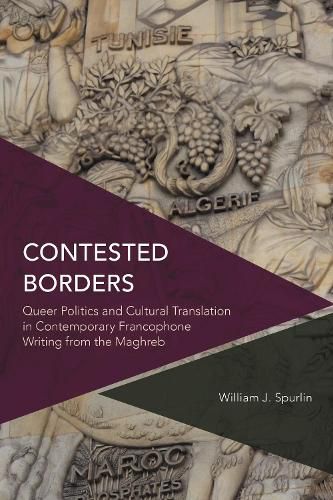
This book broadens understandings of dissident sexualities in Africa through examining new representations of same-sex desire emerging in recent francophone autofictional writing from the Maghreb.
Long-established traditions pertaining to gender and sexuality are brought into contact with new forms of gender and sexual dissidence, resulting from the inflection of globally circulating discourses and embodiments of queerness in North Africa, and from the experience of emigration and settlement by the writers concerned in France. The book analyses specifically how Franco-Maghrebi writers Rachid O., Abdellah Taia, Eyet-Chekib Djaziri, and Nina Bouraoui foreground translation and narrative reflexivity around incommensurable spaces of queerness in order to index their crossings and negotiations of multiple languages, histories and cultures.
By writing in French, Spurlin demonstrates that the writers are not merely mimicking the language of their former coloniser but inflecting a European language with discursive turns of phrase indigenous to North Africa, thus creating new possibilities of meaning and expression to name their lived experiences of gender and sexual alterity-a form of (queer) translational praxis that destabilises received gender/sexual categories both within the Maghreb and in Europe.
$9.00 standard shipping within Australia
FREE standard shipping within Australia for orders over $100.00
Express & International shipping calculated at checkout
Stock availability can be subject to change without notice. We recommend calling the shop or contacting our online team to check availability of low stock items. Please see our Shopping Online page for more details.
This book broadens understandings of dissident sexualities in Africa through examining new representations of same-sex desire emerging in recent francophone autofictional writing from the Maghreb.
Long-established traditions pertaining to gender and sexuality are brought into contact with new forms of gender and sexual dissidence, resulting from the inflection of globally circulating discourses and embodiments of queerness in North Africa, and from the experience of emigration and settlement by the writers concerned in France. The book analyses specifically how Franco-Maghrebi writers Rachid O., Abdellah Taia, Eyet-Chekib Djaziri, and Nina Bouraoui foreground translation and narrative reflexivity around incommensurable spaces of queerness in order to index their crossings and negotiations of multiple languages, histories and cultures.
By writing in French, Spurlin demonstrates that the writers are not merely mimicking the language of their former coloniser but inflecting a European language with discursive turns of phrase indigenous to North Africa, thus creating new possibilities of meaning and expression to name their lived experiences of gender and sexual alterity-a form of (queer) translational praxis that destabilises received gender/sexual categories both within the Maghreb and in Europe.
Search our extensive online catalogue.
