Readings Newsletter
Become a Readings Member to make your shopping experience even easier.
Sign in or sign up for free!
You’re not far away from qualifying for FREE standard shipping within Australia
You’ve qualified for FREE standard shipping within Australia
The cart is loading…


Available open access digitally under CC-BY-NC-ND licence.
Foreword by Gianni Magazzeni, former Senior UN/OHCHR Official and UPR Chief at the United Nations.
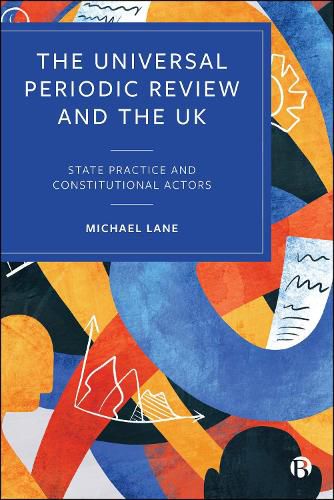
This book analyses the impact of the United Nations' Universal Periodic Review (UPR) process through a case study of the UK. It advances a dual-perspective assessment of the UPR: the 'external' perspective, which focuses on a state's practice at the UPR, and the 'internal' perspective, which examines the influence of the UPR on the executive, legislature and judiciary.
The author introduces a new framework for assessing state participation, drawing on Kathryn Sikkink's 'Evidence for Hope' to advance the methodological rigour of UPR research. The UK context explored in the book highlights the influence of domestic politics, institutional capacity and accountability processes, with implications for Westminster systems worldwide. It is crucial reading for scholars, policy makers and practitioners of international human rights law.
$9.00 standard shipping within Australia
FREE standard shipping within Australia for orders over $100.00
Express & International shipping calculated at checkout
Stock availability can be subject to change without notice. We recommend calling the shop or contacting our online team to check availability of low stock items. Please see our Shopping Online page for more details.
Available open access digitally under CC-BY-NC-ND licence.
Foreword by Gianni Magazzeni, former Senior UN/OHCHR Official and UPR Chief at the United Nations.
This book analyses the impact of the United Nations' Universal Periodic Review (UPR) process through a case study of the UK. It advances a dual-perspective assessment of the UPR: the 'external' perspective, which focuses on a state's practice at the UPR, and the 'internal' perspective, which examines the influence of the UPR on the executive, legislature and judiciary.
The author introduces a new framework for assessing state participation, drawing on Kathryn Sikkink's 'Evidence for Hope' to advance the methodological rigour of UPR research. The UK context explored in the book highlights the influence of domestic politics, institutional capacity and accountability processes, with implications for Westminster systems worldwide. It is crucial reading for scholars, policy makers and practitioners of international human rights law.
Search our extensive online catalogue.
