Readings Newsletter
Become a Readings Member to make your shopping experience even easier.
Sign in or sign up for free!
You’re not far away from qualifying for FREE standard shipping within Australia
You’ve qualified for FREE standard shipping within Australia
The cart is loading…


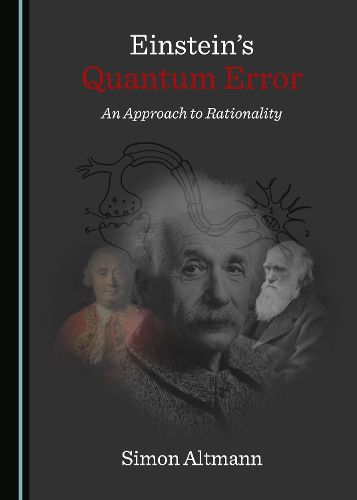
What is it to be rational? This is the fundamental subject of this book as long as we concern ourselves to thinking about the physical world. It used to be thought by philosophers that rational thinking required the use of principles that are absolutes, that have universal application and require no justification. This book argues that this is not so, that such principles as are used in discussing the physical world must in some way be empirically justified. The principle of causality, for instance, as this book shows, reflects the structure of the brain’s neural network - as created by the process of evolution - which is such that repeated inputs reinforce their relation to their effects. Therefore, it parallels in some way the structure of the physical world, at least insofar as the interactions of the latter with our cognitive system have guided the brain’s evolution. This book also discusses the various attacks on science and rationality that emerged during the twentieth century, and discusses very carefully the implications on the philosophy of science of the Theory of Evolution. A very unusual feature of this book is that it contains a number of poems attached at the end of certain chapters. These poems are not the usual science poems that are no more than the lyrical thoughts of some poets about science. They are designed to illustrate definite events in the history of science and some of the important philosophical or theological problems associated with them.
$9.00 standard shipping within Australia
FREE standard shipping within Australia for orders over $100.00
Express & International shipping calculated at checkout
Stock availability can be subject to change without notice. We recommend calling the shop or contacting our online team to check availability of low stock items. Please see our Shopping Online page for more details.
What is it to be rational? This is the fundamental subject of this book as long as we concern ourselves to thinking about the physical world. It used to be thought by philosophers that rational thinking required the use of principles that are absolutes, that have universal application and require no justification. This book argues that this is not so, that such principles as are used in discussing the physical world must in some way be empirically justified. The principle of causality, for instance, as this book shows, reflects the structure of the brain’s neural network - as created by the process of evolution - which is such that repeated inputs reinforce their relation to their effects. Therefore, it parallels in some way the structure of the physical world, at least insofar as the interactions of the latter with our cognitive system have guided the brain’s evolution. This book also discusses the various attacks on science and rationality that emerged during the twentieth century, and discusses very carefully the implications on the philosophy of science of the Theory of Evolution. A very unusual feature of this book is that it contains a number of poems attached at the end of certain chapters. These poems are not the usual science poems that are no more than the lyrical thoughts of some poets about science. They are designed to illustrate definite events in the history of science and some of the important philosophical or theological problems associated with them.
Search our extensive online catalogue.
