Readings Newsletter
Become a Readings Member to make your shopping experience even easier.
Sign in or sign up for free!
You’re not far away from qualifying for FREE standard shipping within Australia
You’ve qualified for FREE standard shipping within Australia
The cart is loading…


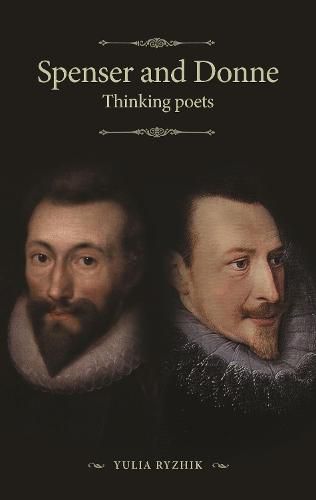
The names Edmund Spenser and John Donne are typically associated with different ages in English poetry, the former with the sixteenth century and the Elizabethan Golden Age, the latter with the ‘metaphysical’ poets of the seventeenth century. This collection of essays, part of The Manchester Spenser series, brings together leading Spenser and Donne scholars to challenge this dichotomous view and to engage critically with both poets, not only at the sites of direct allusion, imitation, or parody, but also in terms of common preoccupations and continuities of thought, informed by the literary and historical contexts of the politically and intellectually turbulent turn of the century. Juxtaposing these two poets, so apparently unlike one another, for comparison rather than contrast changes our understanding of each poet individually and moves towards a more holistic, relational view of their poetics. – .
$9.00 standard shipping within Australia
FREE standard shipping within Australia for orders over $100.00
Express & International shipping calculated at checkout
Stock availability can be subject to change without notice. We recommend calling the shop or contacting our online team to check availability of low stock items. Please see our Shopping Online page for more details.
The names Edmund Spenser and John Donne are typically associated with different ages in English poetry, the former with the sixteenth century and the Elizabethan Golden Age, the latter with the ‘metaphysical’ poets of the seventeenth century. This collection of essays, part of The Manchester Spenser series, brings together leading Spenser and Donne scholars to challenge this dichotomous view and to engage critically with both poets, not only at the sites of direct allusion, imitation, or parody, but also in terms of common preoccupations and continuities of thought, informed by the literary and historical contexts of the politically and intellectually turbulent turn of the century. Juxtaposing these two poets, so apparently unlike one another, for comparison rather than contrast changes our understanding of each poet individually and moves towards a more holistic, relational view of their poetics. – .
Search our extensive online catalogue.
