Readings Newsletter
Become a Readings Member to make your shopping experience even easier.
Sign in or sign up for free!
You’re not far away from qualifying for FREE standard shipping within Australia
You’ve qualified for FREE standard shipping within Australia
The cart is loading…


This title is printed to order. This book may have been self-published. If so, we cannot guarantee the quality of the content. In the main most books will have gone through the editing process however some may not. We therefore suggest that you be aware of this before ordering this book. If in doubt check either the author or publisher’s details as we are unable to accept any returns unless they are faulty. Please contact us if you have any questions.
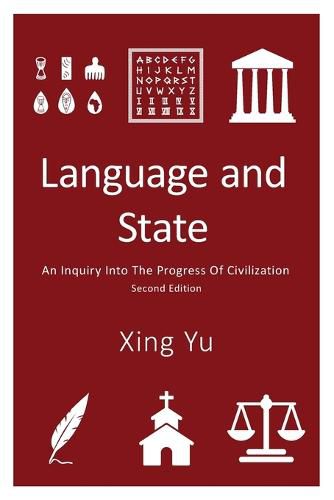
This book argues that while humans communicate using language, they create and use media. Media extend the distance of communication. Humans form themselves into a large community. This happens in a long historical process in which the state of the civilized society replaces the tribe of the primitive society. Language replaces kinship in playing a role in the formation of human society. Then this book argues that while humans communicate using language, they form political, economic and cultural communities which in turn jointly sustain the formation of the state. While humans use language in communication, they also create a series of language solutions to the organization of the state. They make a constitution, hold elections and even set up representation when they govern their state in the principle of democracy. Extending the distance of linguistic communication also underlies the formation of government as well as the emergence of three juxtaposing branches of government-administrative, legislative and judicial bodies. By using language in long-distance linguistic communication, humans further create their history, philosophy, literature, art, religion and law which play a role in the construction of people’s spirit that guides the operation and the future development of the state. Language not only gives origin to the state but also presets the whole process of the development of the state. This book offers one of the most systematic theories about the formation, the building and the future of the state.
$9.00 standard shipping within Australia
FREE standard shipping within Australia for orders over $100.00
Express & International shipping calculated at checkout
Stock availability can be subject to change without notice. We recommend calling the shop or contacting our online team to check availability of low stock items. Please see our Shopping Online page for more details.
This title is printed to order. This book may have been self-published. If so, we cannot guarantee the quality of the content. In the main most books will have gone through the editing process however some may not. We therefore suggest that you be aware of this before ordering this book. If in doubt check either the author or publisher’s details as we are unable to accept any returns unless they are faulty. Please contact us if you have any questions.
This book argues that while humans communicate using language, they create and use media. Media extend the distance of communication. Humans form themselves into a large community. This happens in a long historical process in which the state of the civilized society replaces the tribe of the primitive society. Language replaces kinship in playing a role in the formation of human society. Then this book argues that while humans communicate using language, they form political, economic and cultural communities which in turn jointly sustain the formation of the state. While humans use language in communication, they also create a series of language solutions to the organization of the state. They make a constitution, hold elections and even set up representation when they govern their state in the principle of democracy. Extending the distance of linguistic communication also underlies the formation of government as well as the emergence of three juxtaposing branches of government-administrative, legislative and judicial bodies. By using language in long-distance linguistic communication, humans further create their history, philosophy, literature, art, religion and law which play a role in the construction of people’s spirit that guides the operation and the future development of the state. Language not only gives origin to the state but also presets the whole process of the development of the state. This book offers one of the most systematic theories about the formation, the building and the future of the state.
Search our extensive online catalogue.
