Readings Newsletter
Become a Readings Member to make your shopping experience even easier.
Sign in or sign up for free!
You’re not far away from qualifying for FREE standard shipping within Australia
You’ve qualified for FREE standard shipping within Australia
The cart is loading…


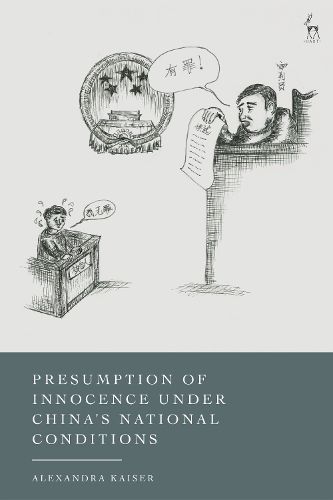
Drawing on broader legal-political discourses within the party-state and institutionalised academia, this book shines a light on one of the most controversial legal principles in Chinese criminal justice: the presumption of innocence.
It argues the reasons why there is no presumption of innocence in China, tracing the curve, or evolution, of academic discourse about presumption of innocence against the backdrop of changing politics, or varying emphases on national conditions, from Mao Zedong to Xi Jinping. The book deepens our understanding of the trajectory of criminal justice reforms in the party-state and shows how the more open and liberal phases of the reform era opened up some space for pluralist views and constructive criticism. In comparison, the second wave of autocratisation of the system influenced the conception of the criminal and paved the way for an illiberal turn.
$9.00 standard shipping within Australia
FREE standard shipping within Australia for orders over $100.00
Express & International shipping calculated at checkout
Stock availability can be subject to change without notice. We recommend calling the shop or contacting our online team to check availability of low stock items. Please see our Shopping Online page for more details.
Drawing on broader legal-political discourses within the party-state and institutionalised academia, this book shines a light on one of the most controversial legal principles in Chinese criminal justice: the presumption of innocence.
It argues the reasons why there is no presumption of innocence in China, tracing the curve, or evolution, of academic discourse about presumption of innocence against the backdrop of changing politics, or varying emphases on national conditions, from Mao Zedong to Xi Jinping. The book deepens our understanding of the trajectory of criminal justice reforms in the party-state and shows how the more open and liberal phases of the reform era opened up some space for pluralist views and constructive criticism. In comparison, the second wave of autocratisation of the system influenced the conception of the criminal and paved the way for an illiberal turn.
Search our extensive online catalogue.
