Readings Newsletter
Become a Readings Member to make your shopping experience even easier.
Sign in or sign up for free!
You’re not far away from qualifying for FREE standard shipping within Australia
You’ve qualified for FREE standard shipping within Australia
The cart is loading…


In order to compete with Western powers, Japan began to rapidly modernize its governing institutions, in the process creating a national population registration and identification bureaucracy, the Koseki system, in 1871. A few decades later, when Japan began to extract natural resources from and militarize Northeast China during its colonial expansion, new identification technologies were introduced to control a growing population of colonial subjects. Against the historical backdrop of these pioneering identification systems in Japan, Midori Ogasawara invites readers to delve into the little-known genealogy of modern-day identification systems, and the colonial roots of the surveillance technologies that saturate our digital lives today.
Based on archival research in Japan and China, as well as interviews with the families of Chinese survivors of Japanese colonialism, this book explores the emergence of Japanese identification systems and the transformation of identification techniques in its colonies and occupied areas. Taking a historical and sociological perspective informed by surveillance studies, Ogasawara shows how biometric identification became a powerful means of population control and racialization of ethnic others, a process that helped the Japanese government to classify the Chinese as "desirable" or "undesirable" and to reduce whole persons to mere resources. Tracing it from the Koseki system to colonial surveillance in Northeast China, Ogasawara uncovers the troubling history of identification technology in modern Japan.
$9.00 standard shipping within Australia
FREE standard shipping within Australia for orders over $100.00
Express & International shipping calculated at checkout
Stock availability can be subject to change without notice. We recommend calling the shop or contacting our online team to check availability of low stock items. Please see our Shopping Online page for more details.
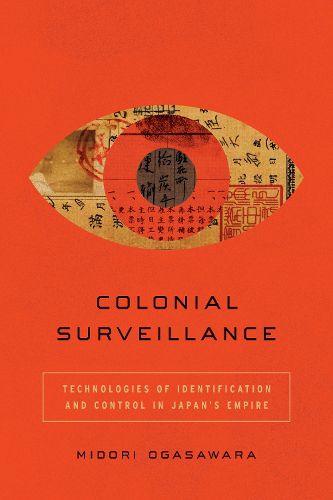
In order to compete with Western powers, Japan began to rapidly modernize its governing institutions, in the process creating a national population registration and identification bureaucracy, the Koseki system, in 1871. A few decades later, when Japan began to extract natural resources from and militarize Northeast China during its colonial expansion, new identification technologies were introduced to control a growing population of colonial subjects. Against the historical backdrop of these pioneering identification systems in Japan, Midori Ogasawara invites readers to delve into the little-known genealogy of modern-day identification systems, and the colonial roots of the surveillance technologies that saturate our digital lives today.
Based on archival research in Japan and China, as well as interviews with the families of Chinese survivors of Japanese colonialism, this book explores the emergence of Japanese identification systems and the transformation of identification techniques in its colonies and occupied areas. Taking a historical and sociological perspective informed by surveillance studies, Ogasawara shows how biometric identification became a powerful means of population control and racialization of ethnic others, a process that helped the Japanese government to classify the Chinese as "desirable" or "undesirable" and to reduce whole persons to mere resources. Tracing it from the Koseki system to colonial surveillance in Northeast China, Ogasawara uncovers the troubling history of identification technology in modern Japan.
Search our extensive online catalogue.
