Readings Newsletter
Become a Readings Member to make your shopping experience even easier.
Sign in or sign up for free!
You’re not far away from qualifying for FREE standard shipping within Australia
You’ve qualified for FREE standard shipping within Australia
The cart is loading…


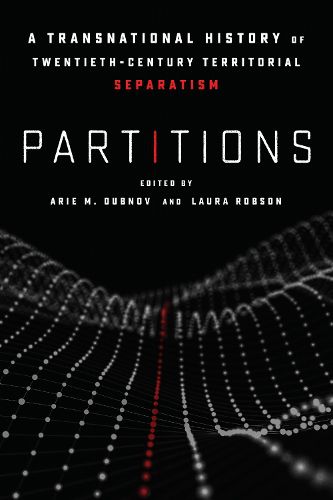
Partition-the physical division of territory along ethno-religious lines into separate nation-states-is often presented as a successful political solution to ethnic conflict. In the twentieth century, at least three new political entities-the Irish Free State, the Dominions (later Republics) of India and Pakistan, and the State of Israel-emerged as results of partition. This volume offers the first collective history of the concept of partition, tracing its emergence in the aftermath of the First World War and locating its genealogy in the politics of twentieth-century empire and decolonization.
Making use of the transnational framework of the British Empire, which presided over the three major partitions of the twentieth century, contributors draw out concrete connections among the cases of Ireland, Pakistan, and Israel-the mutual influences, shared personnel, economic justifications, and material interests that propelled the idea of partition forward and resulted in the violent creation of new post-colonial political spaces. In so doing, the volume seeks to move beyond the nationalist frameworks that served in the first instance to promote partition as a natural phenomenon.
$9.00 standard shipping within Australia
FREE standard shipping within Australia for orders over $100.00
Express & International shipping calculated at checkout
Stock availability can be subject to change without notice. We recommend calling the shop or contacting our online team to check availability of low stock items. Please see our Shopping Online page for more details.
Partition-the physical division of territory along ethno-religious lines into separate nation-states-is often presented as a successful political solution to ethnic conflict. In the twentieth century, at least three new political entities-the Irish Free State, the Dominions (later Republics) of India and Pakistan, and the State of Israel-emerged as results of partition. This volume offers the first collective history of the concept of partition, tracing its emergence in the aftermath of the First World War and locating its genealogy in the politics of twentieth-century empire and decolonization.
Making use of the transnational framework of the British Empire, which presided over the three major partitions of the twentieth century, contributors draw out concrete connections among the cases of Ireland, Pakistan, and Israel-the mutual influences, shared personnel, economic justifications, and material interests that propelled the idea of partition forward and resulted in the violent creation of new post-colonial political spaces. In so doing, the volume seeks to move beyond the nationalist frameworks that served in the first instance to promote partition as a natural phenomenon.
Search our extensive online catalogue.
