Readings Newsletter
Become a Readings Member to make your shopping experience even easier.
Sign in or sign up for free!
You’re not far away from qualifying for FREE standard shipping within Australia
You’ve qualified for FREE standard shipping within Australia
The cart is loading…


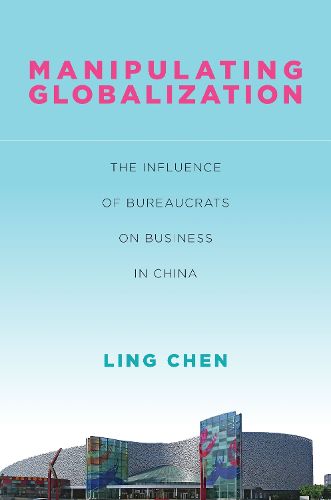
The era of globalization saw China emerge as the world’s manufacturing titan. However, the made in China model-with its reliance on cheap labor and thin profits-has begun to wane. Beginning in the 2000s, the Chinese state shifted from attracting foreign investment to promoting the technological competitiveness of domestic firms. This shift caused tensions between winners and losers, leading local bureaucrats to compete for resources in government budget, funding, and tax breaks. While bureaucrats successfully built coalitions to motivate businesses to upgrade in some cities, in others, vested interests within the government deprived businesses of developmental resources and left them in a desperate race to the bottom.
In Manipulating Globalization, Ling Chen argues that the roots of coalitional variation lie in the type of foreign firms with which local governments forged alliances. Cities that initially attracted large global firms with a significant share of exports were more likely to experience manipulation from vested interests down the road compared to those that attracted smaller foreign firms. The book develops the argument with in-depth interviews and tests it with quantitative data across hundreds of Chinese cities and thousands of firms. Chen advances a new theory of economic policies in authoritarian regimes and informs debates about the nature of Chinese capitalism. Her findings shed light on state-led development and coalition formation in other emerging economies that comprise the new globalized generation.
$9.00 standard shipping within Australia
FREE standard shipping within Australia for orders over $100.00
Express & International shipping calculated at checkout
Stock availability can be subject to change without notice. We recommend calling the shop or contacting our online team to check availability of low stock items. Please see our Shopping Online page for more details.
The era of globalization saw China emerge as the world’s manufacturing titan. However, the made in China model-with its reliance on cheap labor and thin profits-has begun to wane. Beginning in the 2000s, the Chinese state shifted from attracting foreign investment to promoting the technological competitiveness of domestic firms. This shift caused tensions between winners and losers, leading local bureaucrats to compete for resources in government budget, funding, and tax breaks. While bureaucrats successfully built coalitions to motivate businesses to upgrade in some cities, in others, vested interests within the government deprived businesses of developmental resources and left them in a desperate race to the bottom.
In Manipulating Globalization, Ling Chen argues that the roots of coalitional variation lie in the type of foreign firms with which local governments forged alliances. Cities that initially attracted large global firms with a significant share of exports were more likely to experience manipulation from vested interests down the road compared to those that attracted smaller foreign firms. The book develops the argument with in-depth interviews and tests it with quantitative data across hundreds of Chinese cities and thousands of firms. Chen advances a new theory of economic policies in authoritarian regimes and informs debates about the nature of Chinese capitalism. Her findings shed light on state-led development and coalition formation in other emerging economies that comprise the new globalized generation.
Search our extensive online catalogue.
