Readings Newsletter
Become a Readings Member to make your shopping experience even easier.
Sign in or sign up for free!
You’re not far away from qualifying for FREE standard shipping within Australia
You’ve qualified for FREE standard shipping within Australia
The cart is loading…


This title is printed to order. This book may have been self-published. If so, we cannot guarantee the quality of the content. In the main most books will have gone through the editing process however some may not. We therefore suggest that you be aware of this before ordering this book. If in doubt check either the author or publisher’s details as we are unable to accept any returns unless they are faulty. Please contact us if you have any questions.
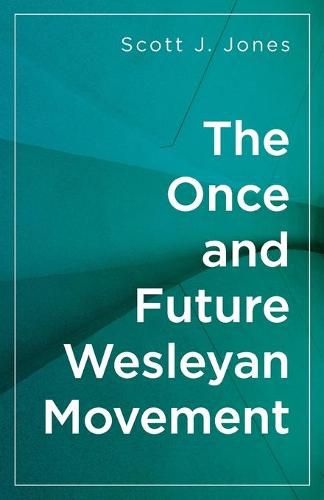
Jones argues that several unique factors remain available to The United Methodist Church today from the period of rapid growth between 1800 and 1840. Drawing on the image of Loren Mead’s Once and Future Church and Moises Naim’s analysis in The End of Power, Jones argues that a viable future for United Methodism is to recapture the dynamism of being a movement, with many of the characteristics of early 19th century Methodism coming to the fore. It will draw on three key works about Methodism in the first half of the 19th century: Nathan Hatch’s Democratization of American Christianity, John Wigger’s Taking Heaven by Storm, and Gregory Schneider’s The Way of the Cross Leads Home. The book talks about how the Wesleyan form of church contains important resources for the future of Christianity. It focuses on the United States and the first half is broadly applicable to all denominations in the Wesleyan tradition. The last half of the book discusses obstacles that are currently preventing the United Methodist Church from achieving its potential. It closes with a hopeful vision of what a renewed United Methodism might look like.
$9.00 standard shipping within Australia
FREE standard shipping within Australia for orders over $100.00
Express & International shipping calculated at checkout
Stock availability can be subject to change without notice. We recommend calling the shop or contacting our online team to check availability of low stock items. Please see our Shopping Online page for more details.
This title is printed to order. This book may have been self-published. If so, we cannot guarantee the quality of the content. In the main most books will have gone through the editing process however some may not. We therefore suggest that you be aware of this before ordering this book. If in doubt check either the author or publisher’s details as we are unable to accept any returns unless they are faulty. Please contact us if you have any questions.
Jones argues that several unique factors remain available to The United Methodist Church today from the period of rapid growth between 1800 and 1840. Drawing on the image of Loren Mead’s Once and Future Church and Moises Naim’s analysis in The End of Power, Jones argues that a viable future for United Methodism is to recapture the dynamism of being a movement, with many of the characteristics of early 19th century Methodism coming to the fore. It will draw on three key works about Methodism in the first half of the 19th century: Nathan Hatch’s Democratization of American Christianity, John Wigger’s Taking Heaven by Storm, and Gregory Schneider’s The Way of the Cross Leads Home. The book talks about how the Wesleyan form of church contains important resources for the future of Christianity. It focuses on the United States and the first half is broadly applicable to all denominations in the Wesleyan tradition. The last half of the book discusses obstacles that are currently preventing the United Methodist Church from achieving its potential. It closes with a hopeful vision of what a renewed United Methodism might look like.
Search our extensive online catalogue.
