Readings Newsletter
Become a Readings Member to make your shopping experience even easier.
Sign in or sign up for free!
You’re not far away from qualifying for FREE standard shipping within Australia
You’ve qualified for FREE standard shipping within Australia
The cart is loading…


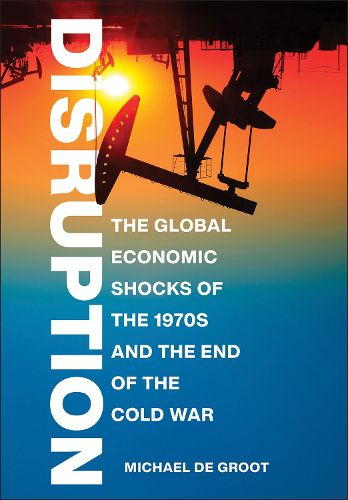
In Disruption, Michael De Groot argues that the global economic upheaval of the 1970s was decisive in ending the Cold War. Both the West and the Soviet bloc struggled with the slowdown of economic growth; chaos in the international monetary system; inflation; shocks in the commodities markets; and the emergence of offshore financial markets. The superpowers had previously disseminated resources to their allies to enhance their own national security, but the disappearance of postwar conditions during the 1970s forced Washington and Moscow to choose between promoting their own economic interests and supporting their partners in Europe and Asia.
De Groot shows that new unexpected macroeconomic imbalances in global capitalism sustained the West during the following decade. Rather than a creditor nation and net exporter, as it had been during the postwar period, the United States became a net importer of capital and goods during the 1980s that helped fund public spending, stimulated economic activity, and lubricated the private sector. The United States could now live beyond its means and continue waging the Cold War, and its allies benefited from access to the booming US market and the strengthened US military umbrella. As Disruption demonstrates, a new symbiotic economic architecture powered the West, but the Eastern European regimes increasingly became a burden to the Soviet Union. They were drowning in debt, and the Kremlin no longer had the resources to rescue them.
$9.00 standard shipping within Australia
FREE standard shipping within Australia for orders over $100.00
Express & International shipping calculated at checkout
Stock availability can be subject to change without notice. We recommend calling the shop or contacting our online team to check availability of low stock items. Please see our Shopping Online page for more details.
In Disruption, Michael De Groot argues that the global economic upheaval of the 1970s was decisive in ending the Cold War. Both the West and the Soviet bloc struggled with the slowdown of economic growth; chaos in the international monetary system; inflation; shocks in the commodities markets; and the emergence of offshore financial markets. The superpowers had previously disseminated resources to their allies to enhance their own national security, but the disappearance of postwar conditions during the 1970s forced Washington and Moscow to choose between promoting their own economic interests and supporting their partners in Europe and Asia.
De Groot shows that new unexpected macroeconomic imbalances in global capitalism sustained the West during the following decade. Rather than a creditor nation and net exporter, as it had been during the postwar period, the United States became a net importer of capital and goods during the 1980s that helped fund public spending, stimulated economic activity, and lubricated the private sector. The United States could now live beyond its means and continue waging the Cold War, and its allies benefited from access to the booming US market and the strengthened US military umbrella. As Disruption demonstrates, a new symbiotic economic architecture powered the West, but the Eastern European regimes increasingly became a burden to the Soviet Union. They were drowning in debt, and the Kremlin no longer had the resources to rescue them.
Search our extensive online catalogue.
