Readings Newsletter
Become a Readings Member to make your shopping experience even easier.
Sign in or sign up for free!
You’re not far away from qualifying for FREE standard shipping within Australia
You’ve qualified for FREE standard shipping within Australia
The cart is loading…


This title is printed to order. This book may have been self-published. If so, we cannot guarantee the quality of the content. In the main most books will have gone through the editing process however some may not. We therefore suggest that you be aware of this before ordering this book. If in doubt check either the author or publisher’s details as we are unable to accept any returns unless they are faulty. Please contact us if you have any questions.
Theory of economic growth has made remarkable progress over the past three decades that has helped give us a better understanding of factors that induce or inhibit growth. In practice, though, a majority of countries have failed to increase growth and improve living conditions. The elixir that has been absent from traditional growth theories is the role of an enabling environment that is needed to induce and support growth. This book--a case study of Nepal's poverty--presents the view that non-economic factors play an outsized role in determining the productive use of economic resources which is critical to spur growth, to a much greater extent that the level of resources a country commands. The theme developed in this book is that a country's institutional weaknesses create a hostile environment for economic growth to occur and be sustained. Institutional handicaps exercise powerful constraints on the efficiency of use of resources and creation of wealth. This happens because institutions are rooted in a country's history, its culture, emotions, and even in national psychology.
$9.00 standard shipping within Australia
FREE standard shipping within Australia for orders over $100.00
Express & International shipping calculated at checkout
Stock availability can be subject to change without notice. We recommend calling the shop or contacting our online team to check availability of low stock items. Please see our Shopping Online page for more details.
This title is printed to order. This book may have been self-published. If so, we cannot guarantee the quality of the content. In the main most books will have gone through the editing process however some may not. We therefore suggest that you be aware of this before ordering this book. If in doubt check either the author or publisher’s details as we are unable to accept any returns unless they are faulty. Please contact us if you have any questions.
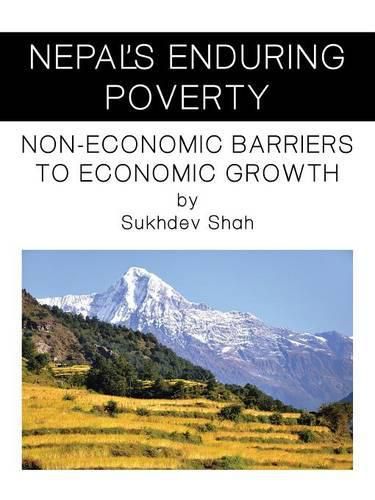
Theory of economic growth has made remarkable progress over the past three decades that has helped give us a better understanding of factors that induce or inhibit growth. In practice, though, a majority of countries have failed to increase growth and improve living conditions. The elixir that has been absent from traditional growth theories is the role of an enabling environment that is needed to induce and support growth. This book--a case study of Nepal's poverty--presents the view that non-economic factors play an outsized role in determining the productive use of economic resources which is critical to spur growth, to a much greater extent that the level of resources a country commands. The theme developed in this book is that a country's institutional weaknesses create a hostile environment for economic growth to occur and be sustained. Institutional handicaps exercise powerful constraints on the efficiency of use of resources and creation of wealth. This happens because institutions are rooted in a country's history, its culture, emotions, and even in national psychology.
Search our extensive online catalogue.
