Readings Newsletter
Become a Readings Member to make your shopping experience even easier.
Sign in or sign up for free!
You’re not far away from qualifying for FREE standard shipping within Australia
You’ve qualified for FREE standard shipping within Australia
The cart is loading…


Contributions by Rudyard J. Alcocer, Christopher L. Ballengee, Lazaro J. Gonzalez, Koby Bryan Hansen, Kim Johnson, Shweta Kishore, Sinah Theres Kloss, Gabriela Martinez, Thomas Matusiak, Maria Fernanda Mino, Rachel Moseley-Wood, Bernardo Oliveira, Rupa Pillai, Ana Patricia Rodriguez, Keya Saxena, Lisa Tomlinson, Vuk Vukovic, and Bartosz Wojcik
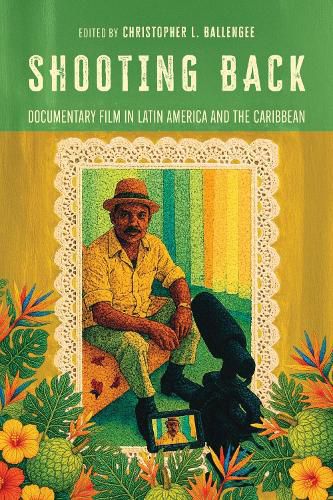
Shooting Back: Documentary Film in Latin America and the Caribbean brings much-needed critical attention to the documentary and ethnographic filmmaking traditions of Latin America and the Caribbean, regions where fiction cinema has long dominated scholarly discourse. This wide-ranging collection explores the diverse social, cultural, political, and institutional forces that shape nonfiction filmmaking across the hemisphere.
Featuring essays from leading and emerging scholars, the volume examines how documentary and ethnographic films have responded to and influenced political movements, national identity, and cultural memory. Contributors investigate how these films affirm or contest colonial legacies, challenge systems of power and inequality, and reflect ongoing struggles around migration, diaspora, and decolonial thought.
In addition to thematic explorations, Shooting Back delves into the practical realities of filmmaking in the region, from production and distribution to the roles played by educational and governmental institutions. The collection also considers the impact of film festivals, evolving technologies, and transnational networks, offering comparative analyses of key works and filmmakers.
As both a scholarly intervention and an invitation for further research, Shooting Back situates Latin American and Caribbean documentary within broader conversations about global cinema, postcolonial critique, and Global South studies. This volume is an essential resource for film scholars, Latin Americanists, and anyone interested in the political and aesthetic power of nonfiction film.
$9.00 standard shipping within Australia
FREE standard shipping within Australia for orders over $100.00
Express & International shipping calculated at checkout
Stock availability can be subject to change without notice. We recommend calling the shop or contacting our online team to check availability of low stock items. Please see our Shopping Online page for more details.
Contributions by Rudyard J. Alcocer, Christopher L. Ballengee, Lazaro J. Gonzalez, Koby Bryan Hansen, Kim Johnson, Shweta Kishore, Sinah Theres Kloss, Gabriela Martinez, Thomas Matusiak, Maria Fernanda Mino, Rachel Moseley-Wood, Bernardo Oliveira, Rupa Pillai, Ana Patricia Rodriguez, Keya Saxena, Lisa Tomlinson, Vuk Vukovic, and Bartosz Wojcik
Shooting Back: Documentary Film in Latin America and the Caribbean brings much-needed critical attention to the documentary and ethnographic filmmaking traditions of Latin America and the Caribbean, regions where fiction cinema has long dominated scholarly discourse. This wide-ranging collection explores the diverse social, cultural, political, and institutional forces that shape nonfiction filmmaking across the hemisphere.
Featuring essays from leading and emerging scholars, the volume examines how documentary and ethnographic films have responded to and influenced political movements, national identity, and cultural memory. Contributors investigate how these films affirm or contest colonial legacies, challenge systems of power and inequality, and reflect ongoing struggles around migration, diaspora, and decolonial thought.
In addition to thematic explorations, Shooting Back delves into the practical realities of filmmaking in the region, from production and distribution to the roles played by educational and governmental institutions. The collection also considers the impact of film festivals, evolving technologies, and transnational networks, offering comparative analyses of key works and filmmakers.
As both a scholarly intervention and an invitation for further research, Shooting Back situates Latin American and Caribbean documentary within broader conversations about global cinema, postcolonial critique, and Global South studies. This volume is an essential resource for film scholars, Latin Americanists, and anyone interested in the political and aesthetic power of nonfiction film.
Search our extensive online catalogue.
