Readings Newsletter
Become a Readings Member to make your shopping experience even easier.
Sign in or sign up for free!
You’re not far away from qualifying for FREE standard shipping within Australia
You’ve qualified for FREE standard shipping within Australia
The cart is loading…


This title is printed to order. This book may have been self-published. If so, we cannot guarantee the quality of the content. In the main most books will have gone through the editing process however some may not. We therefore suggest that you be aware of this before ordering this book. If in doubt check either the author or publisher’s details as we are unable to accept any returns unless they are faulty. Please contact us if you have any questions.
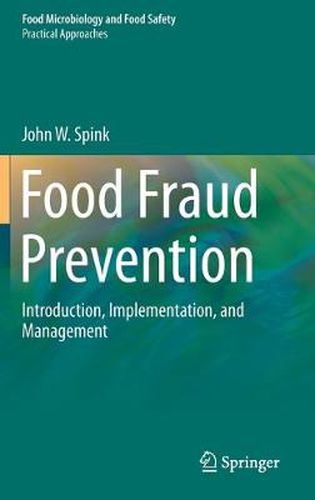
This textbook provides both the theoretical and concrete foundations needed to fully develop, implement, and manage a Food Fraud Prevention Strategy. The scope of focus includes all types of fraud (from adulterant-substances to stolen goods to counterfeits) and all types of products (from ingredients through to finished goods at retail).
There are now broad, harmonized, and thorough regulatory and standard certification requirements for the food manufacturers, suppliers, and retailers. These requirements create a need for a more focused and systematic approach to understanding the root cause, conducting vulnerability assessments, and organizing and implementing a Food Fraud Prevention Strategy. A major step in the harmonizing and sharing of best practices was the 2018 industry-wide standards and certification requirements in the Global Food Safety Initiative (GFSI) endorsed Food Safety Management Systems (e.g., BRC, FSSC, IFS, & SQF). Addressing food fraud is now NOT optional - requirements include implementing a Food Fraud Vulnerability Assessment and a Food Fraud Prevention Strategy for all types of fraud and for all products.
The overall prevention strategy presented in this book begins with the basic requirements and expands through the criminology root cause analysis to the final resource-allocation decision-making based on the COSO principle of Enterprise Risk Management/ ERM. The focus on the root cause expands from detection and catching bad guys to the application of foundational criminology concepts that reduce the overall vulnerability. The concepts are integrated into a fully integrated and inter-connected management system that utilizes the Food Fraud Prevention Cycle (FFPC) that starts with a pre-filter or Food Fraud Initial Screening (FFIS). This is a comprehensive and all-encompassing textbook that takes an interdisciplinary approach to the most basic and most challenging questions of how to start, what to do, how much is enough, and how to measure success.
$9.00 standard shipping within Australia
FREE standard shipping within Australia for orders over $100.00
Express & International shipping calculated at checkout
Stock availability can be subject to change without notice. We recommend calling the shop or contacting our online team to check availability of low stock items. Please see our Shopping Online page for more details.
This title is printed to order. This book may have been self-published. If so, we cannot guarantee the quality of the content. In the main most books will have gone through the editing process however some may not. We therefore suggest that you be aware of this before ordering this book. If in doubt check either the author or publisher’s details as we are unable to accept any returns unless they are faulty. Please contact us if you have any questions.
This textbook provides both the theoretical and concrete foundations needed to fully develop, implement, and manage a Food Fraud Prevention Strategy. The scope of focus includes all types of fraud (from adulterant-substances to stolen goods to counterfeits) and all types of products (from ingredients through to finished goods at retail).
There are now broad, harmonized, and thorough regulatory and standard certification requirements for the food manufacturers, suppliers, and retailers. These requirements create a need for a more focused and systematic approach to understanding the root cause, conducting vulnerability assessments, and organizing and implementing a Food Fraud Prevention Strategy. A major step in the harmonizing and sharing of best practices was the 2018 industry-wide standards and certification requirements in the Global Food Safety Initiative (GFSI) endorsed Food Safety Management Systems (e.g., BRC, FSSC, IFS, & SQF). Addressing food fraud is now NOT optional - requirements include implementing a Food Fraud Vulnerability Assessment and a Food Fraud Prevention Strategy for all types of fraud and for all products.
The overall prevention strategy presented in this book begins with the basic requirements and expands through the criminology root cause analysis to the final resource-allocation decision-making based on the COSO principle of Enterprise Risk Management/ ERM. The focus on the root cause expands from detection and catching bad guys to the application of foundational criminology concepts that reduce the overall vulnerability. The concepts are integrated into a fully integrated and inter-connected management system that utilizes the Food Fraud Prevention Cycle (FFPC) that starts with a pre-filter or Food Fraud Initial Screening (FFIS). This is a comprehensive and all-encompassing textbook that takes an interdisciplinary approach to the most basic and most challenging questions of how to start, what to do, how much is enough, and how to measure success.
Search our extensive online catalogue.
