Readings Newsletter
Become a Readings Member to make your shopping experience even easier.
Sign in or sign up for free!
You’re not far away from qualifying for FREE standard shipping within Australia
You’ve qualified for FREE standard shipping within Australia
The cart is loading…


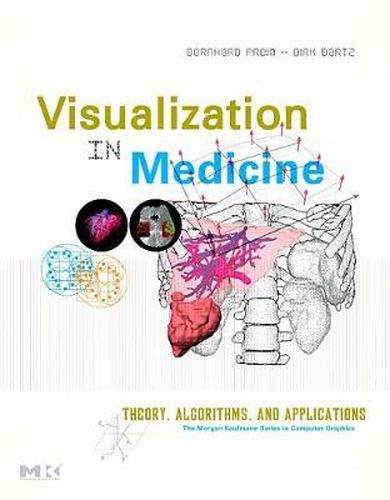
Visualization in Medicine is the first book on visualization and its application to problems in medical diagnosis, education, and treatment. The book describes the algorithms, the applications and their validation (how reliable are the results?), and the clinical evaluation of the applications (are the techniques useful?). It discusses visualization techniques from research literature as well as the compromises required to solve practical clinical problems.
The book covers image acquisition, image analysis, and interaction techniques designed to explore and analyze the data. The final chapter shows how visualization is used for planning liver surgery, one of the most demanding surgical disciplines. The book is based on several years of the authors’ teaching and research experience. Both authors have initiated and lead a variety of interdisciplinary projects involving computer scientists and medical doctors, primarily radiologists and surgeons.
* A core field of visualization and graphics missing a dedicated book until now * Written by pioneers in the field and illustrated in full color * Covers theory as well as practice
$9.00 standard shipping within Australia
FREE standard shipping within Australia for orders over $100.00
Express & International shipping calculated at checkout
Stock availability can be subject to change without notice. We recommend calling the shop or contacting our online team to check availability of low stock items. Please see our Shopping Online page for more details.
Visualization in Medicine is the first book on visualization and its application to problems in medical diagnosis, education, and treatment. The book describes the algorithms, the applications and their validation (how reliable are the results?), and the clinical evaluation of the applications (are the techniques useful?). It discusses visualization techniques from research literature as well as the compromises required to solve practical clinical problems.
The book covers image acquisition, image analysis, and interaction techniques designed to explore and analyze the data. The final chapter shows how visualization is used for planning liver surgery, one of the most demanding surgical disciplines. The book is based on several years of the authors’ teaching and research experience. Both authors have initiated and lead a variety of interdisciplinary projects involving computer scientists and medical doctors, primarily radiologists and surgeons.
* A core field of visualization and graphics missing a dedicated book until now * Written by pioneers in the field and illustrated in full color * Covers theory as well as practice
Search our extensive online catalogue.
