Readings Newsletter
Become a Readings Member to make your shopping experience even easier.
Sign in or sign up for free!
You’re not far away from qualifying for FREE standard shipping within Australia
You’ve qualified for FREE standard shipping within Australia
The cart is loading…


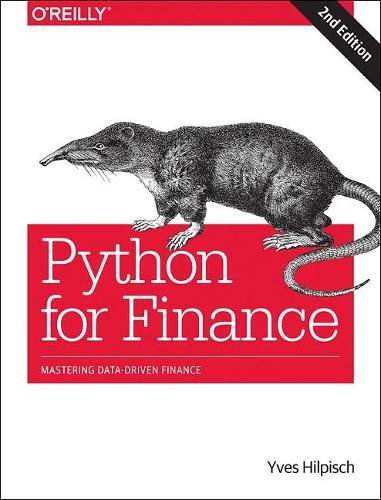
The financial industry has recently adopted Python at a tremendous rate, with some of the largest investment banks and hedge funds using it to build core trading and risk management systems. Updated for Python 3, the second edition of this hands-on book helps you get started with the language, guiding developers and quantitative analysts through Python libraries and tools for building financial applications and interactive financial analytics.
Using practical examples throughout the book, author Yves Hilpisch also shows you how to develop a full-fledged framework for Monte Carlo simulation-based derivatives and risk analytics, based on a large, realistic case study. Much of the book uses interactive IPython Notebooks
$9.00 standard shipping within Australia
FREE standard shipping within Australia for orders over $100.00
Express & International shipping calculated at checkout
Stock availability can be subject to change without notice. We recommend calling the shop or contacting our online team to check availability of low stock items. Please see our Shopping Online page for more details.
The financial industry has recently adopted Python at a tremendous rate, with some of the largest investment banks and hedge funds using it to build core trading and risk management systems. Updated for Python 3, the second edition of this hands-on book helps you get started with the language, guiding developers and quantitative analysts through Python libraries and tools for building financial applications and interactive financial analytics.
Using practical examples throughout the book, author Yves Hilpisch also shows you how to develop a full-fledged framework for Monte Carlo simulation-based derivatives and risk analytics, based on a large, realistic case study. Much of the book uses interactive IPython Notebooks
Search our extensive online catalogue.
