Readings Newsletter
Become a Readings Member to make your shopping experience even easier.
Sign in or sign up for free!
You’re not far away from qualifying for FREE standard shipping within Australia
You’ve qualified for FREE standard shipping within Australia
The cart is loading…


This title is printed to order. This book may have been self-published. If so, we cannot guarantee the quality of the content. In the main most books will have gone through the editing process however some may not. We therefore suggest that you be aware of this before ordering this book. If in doubt check either the author or publisher’s details as we are unable to accept any returns unless they are faulty. Please contact us if you have any questions.
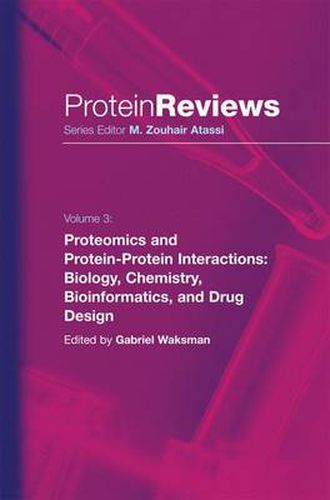
Gabriel Waksman Institute of Structural Molecular Biology, Birkbeck and University College London, Malet Street, London WC1E 7HX, United Kingdom Address for correspondence: Professor Gabriel Waksman Institute of Structural Molecular Biology Birkbeck and University College London Malet Street London WC1E 7H United Kingdom Email: g. waksman@bbk. ac. uk and g. waksman@ucl. ac. uk Phone: (+44) (0) 207 631 6833 Fax: (+44) (0) 207 631 6833 URL: http://people. cryst. bbk. ac. uk/?ubcg54a Gabriel Waksman is Professor of Structural Molecular Biology at the Institute of Structural Molecular Biology at UCL/Birkbeck, of which he is also the director. Before joining the faculty of UCL and Birkbeck, he was the Roy and Diana Vagelos Professor of Biochemistry and Molecular Biophysics at the Washington University School of Medicine in St Louis (USA). The rapidly evolving ?eld of protein science has now come to realize the ubiquity and importance of protein-protein interactions. It had been known for some time that proteins may interact with each other to form functional complexes, but it was thought to be the property of only a handful of key proteins. However, with the advent of hi- throughput proteomics to monitor protein-protein interactions at an organism level, we can now safely state that protein-protein interactions are the norm and not the exception.
$9.00 standard shipping within Australia
FREE standard shipping within Australia for orders over $100.00
Express & International shipping calculated at checkout
Stock availability can be subject to change without notice. We recommend calling the shop or contacting our online team to check availability of low stock items. Please see our Shopping Online page for more details.
This title is printed to order. This book may have been self-published. If so, we cannot guarantee the quality of the content. In the main most books will have gone through the editing process however some may not. We therefore suggest that you be aware of this before ordering this book. If in doubt check either the author or publisher’s details as we are unable to accept any returns unless they are faulty. Please contact us if you have any questions.
Gabriel Waksman Institute of Structural Molecular Biology, Birkbeck and University College London, Malet Street, London WC1E 7HX, United Kingdom Address for correspondence: Professor Gabriel Waksman Institute of Structural Molecular Biology Birkbeck and University College London Malet Street London WC1E 7H United Kingdom Email: g. waksman@bbk. ac. uk and g. waksman@ucl. ac. uk Phone: (+44) (0) 207 631 6833 Fax: (+44) (0) 207 631 6833 URL: http://people. cryst. bbk. ac. uk/?ubcg54a Gabriel Waksman is Professor of Structural Molecular Biology at the Institute of Structural Molecular Biology at UCL/Birkbeck, of which he is also the director. Before joining the faculty of UCL and Birkbeck, he was the Roy and Diana Vagelos Professor of Biochemistry and Molecular Biophysics at the Washington University School of Medicine in St Louis (USA). The rapidly evolving ?eld of protein science has now come to realize the ubiquity and importance of protein-protein interactions. It had been known for some time that proteins may interact with each other to form functional complexes, but it was thought to be the property of only a handful of key proteins. However, with the advent of hi- throughput proteomics to monitor protein-protein interactions at an organism level, we can now safely state that protein-protein interactions are the norm and not the exception.
Search our extensive online catalogue.
