Readings Newsletter
Become a Readings Member to make your shopping experience even easier.
Sign in or sign up for free!
You’re not far away from qualifying for FREE standard shipping within Australia
You’ve qualified for FREE standard shipping within Australia
The cart is loading…


This title is printed to order. This book may have been self-published. If so, we cannot guarantee the quality of the content. In the main most books will have gone through the editing process however some may not. We therefore suggest that you be aware of this before ordering this book. If in doubt check either the author or publisher’s details as we are unable to accept any returns unless they are faulty. Please contact us if you have any questions.
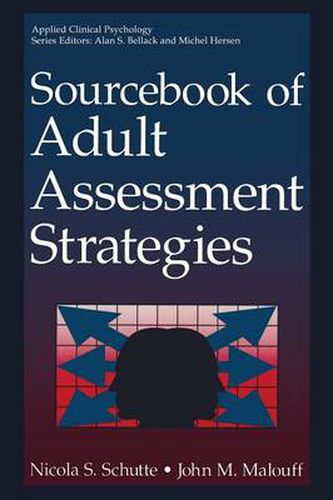
Assessment is a topic that is central to psychology. In the case of clinical psychology, assessment of individual functioning is of keen interest to individuals involved in clinical practice as well as research. Understand ing the multiple domains of functioning, evaluating characteristics of individuals in relation to others (normative assessment) as well as in relation to themselves (ipsative assessment), and charting progress or change over time all require well-developed assessment tools and methods. In light of the importance of the topic, books, journals, and monographs continue to emerge in large numbers to present, address, and evaluate diverse measures. Keeping informed about measures, identifying the mea sures in use, and obtaining the necessary information for their interpreta tion make the task of Sisyphus look like a vacation. In this book, the editors provide information that eases the task remarkably. The overriding goal of this book is to provide concise, useful, and essential information about measures of adult functioning. To that end, this is a sourcebook, a format that is particularly noteworthy. The mea sures are presented and organized according to diagnostic categories, as derived from the Diagnostic and Statistical Manual of Mental Disorders (DSM-IV). The categories are broad (e. g. , substance-related disorders, anx iety disorders, mood disorders, schizophrenia and related disorders) in recognition that those who develop measures and those who use them in clinical research or practice usually do not have narrowly defined diagnos tic entities in mind.
$9.00 standard shipping within Australia
FREE standard shipping within Australia for orders over $100.00
Express & International shipping calculated at checkout
Stock availability can be subject to change without notice. We recommend calling the shop or contacting our online team to check availability of low stock items. Please see our Shopping Online page for more details.
This title is printed to order. This book may have been self-published. If so, we cannot guarantee the quality of the content. In the main most books will have gone through the editing process however some may not. We therefore suggest that you be aware of this before ordering this book. If in doubt check either the author or publisher’s details as we are unable to accept any returns unless they are faulty. Please contact us if you have any questions.
Assessment is a topic that is central to psychology. In the case of clinical psychology, assessment of individual functioning is of keen interest to individuals involved in clinical practice as well as research. Understand ing the multiple domains of functioning, evaluating characteristics of individuals in relation to others (normative assessment) as well as in relation to themselves (ipsative assessment), and charting progress or change over time all require well-developed assessment tools and methods. In light of the importance of the topic, books, journals, and monographs continue to emerge in large numbers to present, address, and evaluate diverse measures. Keeping informed about measures, identifying the mea sures in use, and obtaining the necessary information for their interpreta tion make the task of Sisyphus look like a vacation. In this book, the editors provide information that eases the task remarkably. The overriding goal of this book is to provide concise, useful, and essential information about measures of adult functioning. To that end, this is a sourcebook, a format that is particularly noteworthy. The mea sures are presented and organized according to diagnostic categories, as derived from the Diagnostic and Statistical Manual of Mental Disorders (DSM-IV). The categories are broad (e. g. , substance-related disorders, anx iety disorders, mood disorders, schizophrenia and related disorders) in recognition that those who develop measures and those who use them in clinical research or practice usually do not have narrowly defined diagnos tic entities in mind.
Search our extensive online catalogue.
