Readings Newsletter
Become a Readings Member to make your shopping experience even easier.
Sign in or sign up for free!
You’re not far away from qualifying for FREE standard shipping within Australia
You’ve qualified for FREE standard shipping within Australia
The cart is loading…


This title is printed to order. This book may have been self-published. If so, we cannot guarantee the quality of the content. In the main most books will have gone through the editing process however some may not. We therefore suggest that you be aware of this before ordering this book. If in doubt check either the author or publisher’s details as we are unable to accept any returns unless they are faulty. Please contact us if you have any questions.
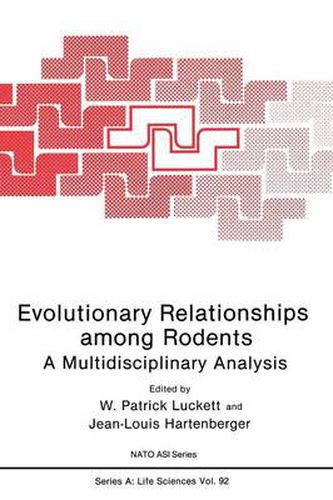
The order Rodentia is the most abundant and successful group of mammals, and it has been a focal point of attention for compar ative and evolutionary biologists for many years. In addition, rodents are the most commonly used experimental mammals for bio medical research, and they have played a central role in investi gations of the genetic and molecular mechanisms of speciation in mammals. During recent decades, a tremendous amount of new data from various aspects of the biology of living and fossil rodents has been accumulated by specialists from different disciplines, ranging from molecular biology to paleontology. Paradoxically, our understanding of the possible evolutionary relationships among different rodent families, as well as the possible affinities of rodents with other eutherian mammals, has not kept pace with this information explosion.
This abundance of new biological data has not been incorporated into a broad synthesis of rodent phylo geny, in part because of the difficulty for any single student of rodent evolution to evaluate the phylogenetic significance of new findings from such diverse disciplines as paleontology, embryology, comparative anatomy, molecular biology, and cytogenetics. The origin and subsequent radiation of the order Rodentia were based primarily on the acquisition of a key character complex: specializations of the incisors, cheek teeth, and associated mus culoskeletal features of the jaws and skull for gnawing and chewing.
$9.00 standard shipping within Australia
FREE standard shipping within Australia for orders over $100.00
Express & International shipping calculated at checkout
Stock availability can be subject to change without notice. We recommend calling the shop or contacting our online team to check availability of low stock items. Please see our Shopping Online page for more details.
This title is printed to order. This book may have been self-published. If so, we cannot guarantee the quality of the content. In the main most books will have gone through the editing process however some may not. We therefore suggest that you be aware of this before ordering this book. If in doubt check either the author or publisher’s details as we are unable to accept any returns unless they are faulty. Please contact us if you have any questions.
The order Rodentia is the most abundant and successful group of mammals, and it has been a focal point of attention for compar ative and evolutionary biologists for many years. In addition, rodents are the most commonly used experimental mammals for bio medical research, and they have played a central role in investi gations of the genetic and molecular mechanisms of speciation in mammals. During recent decades, a tremendous amount of new data from various aspects of the biology of living and fossil rodents has been accumulated by specialists from different disciplines, ranging from molecular biology to paleontology. Paradoxically, our understanding of the possible evolutionary relationships among different rodent families, as well as the possible affinities of rodents with other eutherian mammals, has not kept pace with this information explosion.
This abundance of new biological data has not been incorporated into a broad synthesis of rodent phylo geny, in part because of the difficulty for any single student of rodent evolution to evaluate the phylogenetic significance of new findings from such diverse disciplines as paleontology, embryology, comparative anatomy, molecular biology, and cytogenetics. The origin and subsequent radiation of the order Rodentia were based primarily on the acquisition of a key character complex: specializations of the incisors, cheek teeth, and associated mus culoskeletal features of the jaws and skull for gnawing and chewing.
Search our extensive online catalogue.
