Readings Newsletter
Become a Readings Member to make your shopping experience even easier.
Sign in or sign up for free!
You’re not far away from qualifying for FREE standard shipping within Australia
You’ve qualified for FREE standard shipping within Australia
The cart is loading…


This title is printed to order. This book may have been self-published. If so, we cannot guarantee the quality of the content. In the main most books will have gone through the editing process however some may not. We therefore suggest that you be aware of this before ordering this book. If in doubt check either the author or publisher’s details as we are unable to accept any returns unless they are faulty. Please contact us if you have any questions.
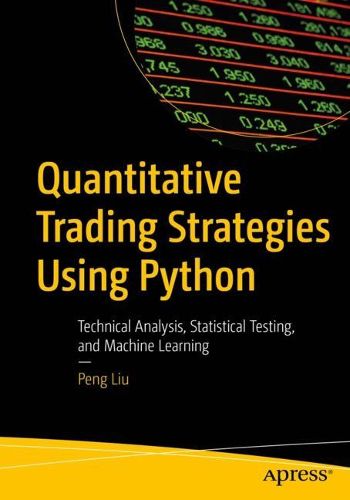
Build and implement trading strategies using Python. This book will introduce you to the fundamental concepts of quantitative trading and shows how to use Python and popular libraries to build trading models and strategies from scratch. It covers practical trading strategies coupled with step-by-step implementations that touch upon a wide range of topics, including data analysis and visualization, algorithmic trading, backtesting, risk management, optimization, and machine learning, all coupled with practical examples in Python.
Part one of Quantitative Trading Strategies with Python covers the fundamentals of trading strategies, including an introduction to quantitative trading, the electronic market, risk and return, and forward and futures contracts. Part two introduces common trading strategies, including trend-following, momentum trading, and evaluation process via backtesting. Part three covers more advanced topics, including statistical arbitrage using hypothesistesting, optimizing trading parameters using Bayesian optimization, and generating trading signals using a machine learning approach.
Whether you're an experienced trader looking to automate your trading strategies or a beginner interested in learning quantitative trading, this book will be a valuable resource. Written in a clear and concise style that makes complex topics easy to understand, and chock full of examples and exercises to help reinforce the key concepts, you'll come away from it with a firm understanding of core trading strategies and how to use Python to implement them.
What You Will Learn
Master the fundamental concepts of quantitative trading Use Python and its popular libraries to build trading models and strategies from scratch Perform data analysis and visualization, algorithmic trading, backtesting, risk management, optimization, and machine learning for trading strategies using Python Utilize common trading strategies such as trend-following, momentum trading, and pairs trading Evaluate different quantitative trading strategies by applying the relevant performance measures and statistics in a scientific manner during backtesting
Who This Book Is For
Aspiring quantitative traders and analysts, data scientists interested in finance, and researchers or students studying quantitative finance, financial engineering, or related fields.
$9.00 standard shipping within Australia
FREE standard shipping within Australia for orders over $100.00
Express & International shipping calculated at checkout
Stock availability can be subject to change without notice. We recommend calling the shop or contacting our online team to check availability of low stock items. Please see our Shopping Online page for more details.
This title is printed to order. This book may have been self-published. If so, we cannot guarantee the quality of the content. In the main most books will have gone through the editing process however some may not. We therefore suggest that you be aware of this before ordering this book. If in doubt check either the author or publisher’s details as we are unable to accept any returns unless they are faulty. Please contact us if you have any questions.
Build and implement trading strategies using Python. This book will introduce you to the fundamental concepts of quantitative trading and shows how to use Python and popular libraries to build trading models and strategies from scratch. It covers practical trading strategies coupled with step-by-step implementations that touch upon a wide range of topics, including data analysis and visualization, algorithmic trading, backtesting, risk management, optimization, and machine learning, all coupled with practical examples in Python.
Part one of Quantitative Trading Strategies with Python covers the fundamentals of trading strategies, including an introduction to quantitative trading, the electronic market, risk and return, and forward and futures contracts. Part two introduces common trading strategies, including trend-following, momentum trading, and evaluation process via backtesting. Part three covers more advanced topics, including statistical arbitrage using hypothesistesting, optimizing trading parameters using Bayesian optimization, and generating trading signals using a machine learning approach.
Whether you're an experienced trader looking to automate your trading strategies or a beginner interested in learning quantitative trading, this book will be a valuable resource. Written in a clear and concise style that makes complex topics easy to understand, and chock full of examples and exercises to help reinforce the key concepts, you'll come away from it with a firm understanding of core trading strategies and how to use Python to implement them.
What You Will Learn
Master the fundamental concepts of quantitative trading Use Python and its popular libraries to build trading models and strategies from scratch Perform data analysis and visualization, algorithmic trading, backtesting, risk management, optimization, and machine learning for trading strategies using Python Utilize common trading strategies such as trend-following, momentum trading, and pairs trading Evaluate different quantitative trading strategies by applying the relevant performance measures and statistics in a scientific manner during backtesting
Who This Book Is For
Aspiring quantitative traders and analysts, data scientists interested in finance, and researchers or students studying quantitative finance, financial engineering, or related fields.
Search our extensive online catalogue.
