Readings Newsletter
Become a Readings Member to make your shopping experience even easier.
Sign in or sign up for free!
You’re not far away from qualifying for FREE standard shipping within Australia
You’ve qualified for FREE standard shipping within Australia
The cart is loading…


This title is printed to order. This book may have been self-published. If so, we cannot guarantee the quality of the content. In the main most books will have gone through the editing process however some may not. We therefore suggest that you be aware of this before ordering this book. If in doubt check either the author or publisher’s details as we are unable to accept any returns unless they are faulty. Please contact us if you have any questions.
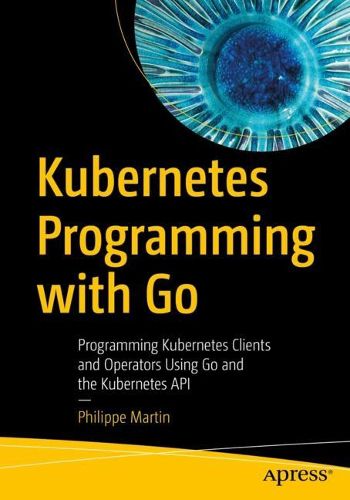
This book begins by introducing the structure of the Kubernetes API and which operations it serves. Following chapters demonstrate how to write native Kubernetes resources definitions using Go structures defined in the API and API Machinery libraries. Miscellaneous utilities are described to help you work with different resource fields and to convert your resource definitions to or from YAML or JSON. Next, you will learn how to interact with the Kubernetes API server to create, delete, update, and monitor resources in a cluster using the client-go library. A complete chapter is devoted to tools provided to test your programs using the client-go library. An example follows to wrap up the first part of the book, describing how to write a kubectl plugin. Next, you will learn how to extend the Kubernetes API using Custom Resource Definitions, and how to write Kubernetes resources in a generic way as well as how to create your own resources using the unstructured concept. The next chapters delve into the controller-runtime library, useful for extending Kubernetes by writing operators, and the kubebuilder framework, which leverages this library, to help you start writing operators in minutes.
After reading this book, you will have a deep understanding of the Kubernetes API's structure and how Kubernetes resources are organized within it, and have at your disposal a complete toolbox to help you write Kubernetes clients and operators.
What You Will Learn
Understand how the Kubernetes API and its resources are organized Write Kubernetes resources in Go Create resources in a cluster Leverage your newly-gained knowledge to write Kubernetes clients and operators
Who is this Book for:
Software engineers and (Site Reliability Engineers) SREs wishing to write Kubernetes clients and operators using the Go language.
$9.00 standard shipping within Australia
FREE standard shipping within Australia for orders over $100.00
Express & International shipping calculated at checkout
Stock availability can be subject to change without notice. We recommend calling the shop or contacting our online team to check availability of low stock items. Please see our Shopping Online page for more details.
This title is printed to order. This book may have been self-published. If so, we cannot guarantee the quality of the content. In the main most books will have gone through the editing process however some may not. We therefore suggest that you be aware of this before ordering this book. If in doubt check either the author or publisher’s details as we are unable to accept any returns unless they are faulty. Please contact us if you have any questions.
This book begins by introducing the structure of the Kubernetes API and which operations it serves. Following chapters demonstrate how to write native Kubernetes resources definitions using Go structures defined in the API and API Machinery libraries. Miscellaneous utilities are described to help you work with different resource fields and to convert your resource definitions to or from YAML or JSON. Next, you will learn how to interact with the Kubernetes API server to create, delete, update, and monitor resources in a cluster using the client-go library. A complete chapter is devoted to tools provided to test your programs using the client-go library. An example follows to wrap up the first part of the book, describing how to write a kubectl plugin. Next, you will learn how to extend the Kubernetes API using Custom Resource Definitions, and how to write Kubernetes resources in a generic way as well as how to create your own resources using the unstructured concept. The next chapters delve into the controller-runtime library, useful for extending Kubernetes by writing operators, and the kubebuilder framework, which leverages this library, to help you start writing operators in minutes.
After reading this book, you will have a deep understanding of the Kubernetes API's structure and how Kubernetes resources are organized within it, and have at your disposal a complete toolbox to help you write Kubernetes clients and operators.
What You Will Learn
Understand how the Kubernetes API and its resources are organized Write Kubernetes resources in Go Create resources in a cluster Leverage your newly-gained knowledge to write Kubernetes clients and operators
Who is this Book for:
Software engineers and (Site Reliability Engineers) SREs wishing to write Kubernetes clients and operators using the Go language.
Search our extensive online catalogue.
