Readings Newsletter
Become a Readings Member to make your shopping experience even easier.
Sign in or sign up for free!
You’re not far away from qualifying for FREE standard shipping within Australia
You’ve qualified for FREE standard shipping within Australia
The cart is loading…


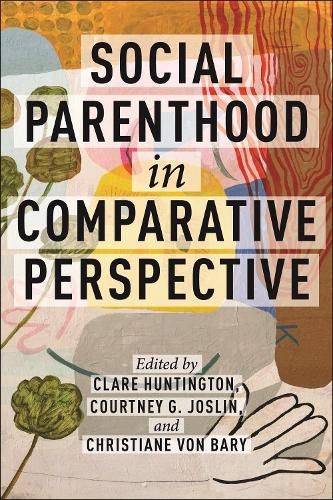
Investigates social parents - people who function as parents but who may not be recognized as such in the eyes of the law What makes a person a parent? Around the world, same-sex couples are raising children; parents are separating and re-partnering, creating blended families; and children are living with grandparents, family friends, and other caregivers. In these situations, there is often an adult who acts like a parent but who is unconnected to the child through biogenetics, marriage, or adoption-the common paths for establishing legal parenthood. In many countries, this person is called a "social parent." Psychologically, and especially from a child's point of view, a social parent is a parent. But the legal status of a social parent is hotly debated. Social Parenthood in Comparative Perspective considers how the law does-and how it should-recognize social parenthood. The book begins with a psychological account of social parenthood, establishing the importance of a relationship between a child and a social parent and the harms of not protecting this relationship. It then turns to social scientists to identify and explore some circumstances when a child may have a social parent. And to compare legal responses to social parenthood, the book draws on the expertise of legal scholars in nine countries in North America and Europe. The legal contributors describe the existing laws governing social parents, critique their efficacy, and offer new insights. Though almost all of the countries analyzed have adapted to the new reality of family life by recognizing social parents in some manner, the nature and extent of the recognition varies widely. The volume concludes by discussing some of the issues flowing from the decision to recognize social parents, including whether social parents should have the same legal rights and responsibilities as other legal parents, whether all social parents must be treated identically, whether the law should limit a child to two parents, and much more. Families are changing, and the law must adapt accordingly. Social Parenthood in Comparative Perspective charts a way forward by offering solutions to help policymakers consider options for addressing social parenthood.
$9.00 standard shipping within Australia
FREE standard shipping within Australia for orders over $100.00
Express & International shipping calculated at checkout
Stock availability can be subject to change without notice. We recommend calling the shop or contacting our online team to check availability of low stock items. Please see our Shopping Online page for more details.
Investigates social parents - people who function as parents but who may not be recognized as such in the eyes of the law What makes a person a parent? Around the world, same-sex couples are raising children; parents are separating and re-partnering, creating blended families; and children are living with grandparents, family friends, and other caregivers. In these situations, there is often an adult who acts like a parent but who is unconnected to the child through biogenetics, marriage, or adoption-the common paths for establishing legal parenthood. In many countries, this person is called a "social parent." Psychologically, and especially from a child's point of view, a social parent is a parent. But the legal status of a social parent is hotly debated. Social Parenthood in Comparative Perspective considers how the law does-and how it should-recognize social parenthood. The book begins with a psychological account of social parenthood, establishing the importance of a relationship between a child and a social parent and the harms of not protecting this relationship. It then turns to social scientists to identify and explore some circumstances when a child may have a social parent. And to compare legal responses to social parenthood, the book draws on the expertise of legal scholars in nine countries in North America and Europe. The legal contributors describe the existing laws governing social parents, critique their efficacy, and offer new insights. Though almost all of the countries analyzed have adapted to the new reality of family life by recognizing social parents in some manner, the nature and extent of the recognition varies widely. The volume concludes by discussing some of the issues flowing from the decision to recognize social parents, including whether social parents should have the same legal rights and responsibilities as other legal parents, whether all social parents must be treated identically, whether the law should limit a child to two parents, and much more. Families are changing, and the law must adapt accordingly. Social Parenthood in Comparative Perspective charts a way forward by offering solutions to help policymakers consider options for addressing social parenthood.
Search our extensive online catalogue.
