Readings Newsletter
Become a Readings Member to make your shopping experience even easier.
Sign in or sign up for free!
You’re not far away from qualifying for FREE standard shipping within Australia
You’ve qualified for FREE standard shipping within Australia
The cart is loading…


This title is printed to order. This book may have been self-published. If so, we cannot guarantee the quality of the content. In the main most books will have gone through the editing process however some may not. We therefore suggest that you be aware of this before ordering this book. If in doubt check either the author or publisher’s details as we are unable to accept any returns unless they are faulty. Please contact us if you have any questions.
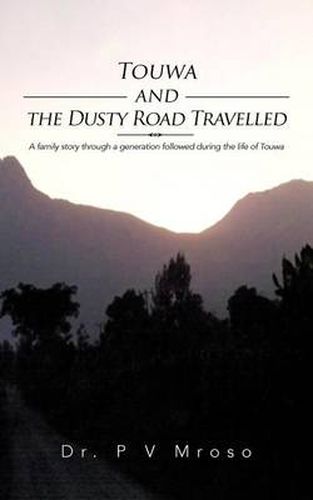
The slopes of Mount Kilimanjaro offer a fertile land, a cool climate, and an abundance of water that over many years wars were fought in attempts to conquer and settle. The people living on the slopes of Mount Kilimanjaro are the Chagga. Historically, there were many alliances that led to security, but also there were betrayals that led to division into small kingdoms ruled by chiefs locally known as mangi. At the end of the wars, the slopes were divided into three major areas named Rombo, Vunjo, and Hai, each ruled by a number of mangi. The seniority of each mangi was measured by his wealth. The population increased rapidly as peace was established. The people on the slopes of the mountain live very closely, packed with water and road facilities comparable to a large metropolitan city, but only with trees and foliage, not concrete. First, Hai was highly populated, followed by Vunjo, but Rombo was sparsely populated as it was the leeward side of the mountain. Before the time of Touwa schooldays, the Nanjara village, which is in Rombo, was a prime area for land ownership such that Europeans were in pursuit to grab some of that land. It was in that state of competition that the local mangi sent vanguards like Touwa’s grandfather and many others to occupy the land to prevent European settlement. That was how the Nanjara village came to existence. The Chagga people have basically one culture, one language with area-based differences of accents, and Nanjara village life could reflect life for all Chagga people.
$9.00 standard shipping within Australia
FREE standard shipping within Australia for orders over $100.00
Express & International shipping calculated at checkout
Stock availability can be subject to change without notice. We recommend calling the shop or contacting our online team to check availability of low stock items. Please see our Shopping Online page for more details.
This title is printed to order. This book may have been self-published. If so, we cannot guarantee the quality of the content. In the main most books will have gone through the editing process however some may not. We therefore suggest that you be aware of this before ordering this book. If in doubt check either the author or publisher’s details as we are unable to accept any returns unless they are faulty. Please contact us if you have any questions.
The slopes of Mount Kilimanjaro offer a fertile land, a cool climate, and an abundance of water that over many years wars were fought in attempts to conquer and settle. The people living on the slopes of Mount Kilimanjaro are the Chagga. Historically, there were many alliances that led to security, but also there were betrayals that led to division into small kingdoms ruled by chiefs locally known as mangi. At the end of the wars, the slopes were divided into three major areas named Rombo, Vunjo, and Hai, each ruled by a number of mangi. The seniority of each mangi was measured by his wealth. The population increased rapidly as peace was established. The people on the slopes of the mountain live very closely, packed with water and road facilities comparable to a large metropolitan city, but only with trees and foliage, not concrete. First, Hai was highly populated, followed by Vunjo, but Rombo was sparsely populated as it was the leeward side of the mountain. Before the time of Touwa schooldays, the Nanjara village, which is in Rombo, was a prime area for land ownership such that Europeans were in pursuit to grab some of that land. It was in that state of competition that the local mangi sent vanguards like Touwa’s grandfather and many others to occupy the land to prevent European settlement. That was how the Nanjara village came to existence. The Chagga people have basically one culture, one language with area-based differences of accents, and Nanjara village life could reflect life for all Chagga people.
Search our extensive online catalogue.
