Readings Newsletter
Become a Readings Member to make your shopping experience even easier.
Sign in or sign up for free!
You’re not far away from qualifying for FREE standard shipping within Australia
You’ve qualified for FREE standard shipping within Australia
The cart is loading…


This title is printed to order. This book may have been self-published. If so, we cannot guarantee the quality of the content. In the main most books will have gone through the editing process however some may not. We therefore suggest that you be aware of this before ordering this book. If in doubt check either the author or publisher’s details as we are unable to accept any returns unless they are faulty. Please contact us if you have any questions.
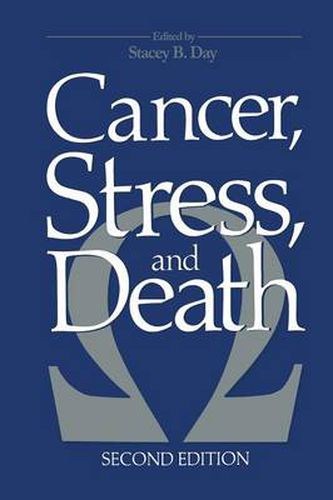
This book has been well received in many places and in many countries. It was awarded a ranking in the top ten publications on behavioral medicine in the year that it first appeared. When, in 1977, we began to fit the components of Cancer, Stress, and Death together, the established medical view was that each subject repre sented a different discipline, and that to integrate fields so diverse in information content was to seek to achieve a synthesis beyond reasonable limits. Had we been required to concern ourselves with the knowledge of each component in its entirety, this might have been so, but our concern, of course, was to integrate only those items of knowledge in any one field that could bear upon the field of interest of another. Moreover, we were concerned that physi cians and scientists take account of the inner forces that shape motivation and individual behavior, as well as the cultural identity of individuals, and we hoped that the biopsychosocial way in which we believed would gain ground and win support. Now, with need for a second edition, one can hardly conceive of not bringing together diverse contributions in one volume. Such syntheses as we have made clearly confirm that one can arrive at several levels of understanding of human situations through wise integration of biological paradigms within various social, cultural, and psychological parameters-which essentially is a simple way of defining the biopsychosocial way.
$9.00 standard shipping within Australia
FREE standard shipping within Australia for orders over $100.00
Express & International shipping calculated at checkout
Stock availability can be subject to change without notice. We recommend calling the shop or contacting our online team to check availability of low stock items. Please see our Shopping Online page for more details.
This title is printed to order. This book may have been self-published. If so, we cannot guarantee the quality of the content. In the main most books will have gone through the editing process however some may not. We therefore suggest that you be aware of this before ordering this book. If in doubt check either the author or publisher’s details as we are unable to accept any returns unless they are faulty. Please contact us if you have any questions.
This book has been well received in many places and in many countries. It was awarded a ranking in the top ten publications on behavioral medicine in the year that it first appeared. When, in 1977, we began to fit the components of Cancer, Stress, and Death together, the established medical view was that each subject repre sented a different discipline, and that to integrate fields so diverse in information content was to seek to achieve a synthesis beyond reasonable limits. Had we been required to concern ourselves with the knowledge of each component in its entirety, this might have been so, but our concern, of course, was to integrate only those items of knowledge in any one field that could bear upon the field of interest of another. Moreover, we were concerned that physi cians and scientists take account of the inner forces that shape motivation and individual behavior, as well as the cultural identity of individuals, and we hoped that the biopsychosocial way in which we believed would gain ground and win support. Now, with need for a second edition, one can hardly conceive of not bringing together diverse contributions in one volume. Such syntheses as we have made clearly confirm that one can arrive at several levels of understanding of human situations through wise integration of biological paradigms within various social, cultural, and psychological parameters-which essentially is a simple way of defining the biopsychosocial way.
Search our extensive online catalogue.
