Readings Newsletter
Become a Readings Member to make your shopping experience even easier.
Sign in or sign up for free!
You’re not far away from qualifying for FREE standard shipping within Australia
You’ve qualified for FREE standard shipping within Australia
The cart is loading…


This title is printed to order. This book may have been self-published. If so, we cannot guarantee the quality of the content. In the main most books will have gone through the editing process however some may not. We therefore suggest that you be aware of this before ordering this book. If in doubt check either the author or publisher’s details as we are unable to accept any returns unless they are faulty. Please contact us if you have any questions.
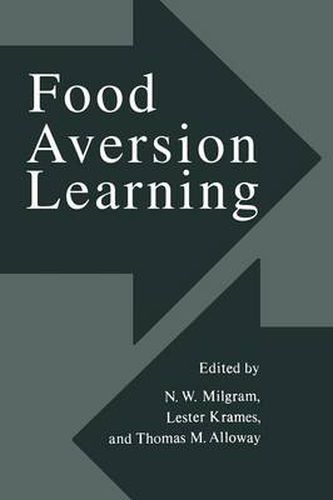
During the past 10 years, the study of learned aversions to foods has become one of the most’ ‘popular areas of research in animal psychology. Learned aversions to foods are typically produced in the laboratory by first allowing an animal to eat (or drink) some distinctively novel substance and then making the animal’ ‘ill in some way, most frequently by either giving it an injection of some illness -producing drug such as lithium chloride or by exposing it to a toxic dose of radiation. When an animal that has been treated in this way is subsequently given another opportunity to ingest the same or a similar substance, one usually observes that it will either totally avoid ingesting the substance or that it will consume less of it than a control animal that was not made ill after previously consuming the same substance. This form of learning has attracted the interest of many researchers because there are two apparently striking differences in the acquisition of food aversions and the acquisition of other types of associative learning.
$9.00 standard shipping within Australia
FREE standard shipping within Australia for orders over $100.00
Express & International shipping calculated at checkout
Stock availability can be subject to change without notice. We recommend calling the shop or contacting our online team to check availability of low stock items. Please see our Shopping Online page for more details.
This title is printed to order. This book may have been self-published. If so, we cannot guarantee the quality of the content. In the main most books will have gone through the editing process however some may not. We therefore suggest that you be aware of this before ordering this book. If in doubt check either the author or publisher’s details as we are unable to accept any returns unless they are faulty. Please contact us if you have any questions.
During the past 10 years, the study of learned aversions to foods has become one of the most’ ‘popular areas of research in animal psychology. Learned aversions to foods are typically produced in the laboratory by first allowing an animal to eat (or drink) some distinctively novel substance and then making the animal’ ‘ill in some way, most frequently by either giving it an injection of some illness -producing drug such as lithium chloride or by exposing it to a toxic dose of radiation. When an animal that has been treated in this way is subsequently given another opportunity to ingest the same or a similar substance, one usually observes that it will either totally avoid ingesting the substance or that it will consume less of it than a control animal that was not made ill after previously consuming the same substance. This form of learning has attracted the interest of many researchers because there are two apparently striking differences in the acquisition of food aversions and the acquisition of other types of associative learning.
Search our extensive online catalogue.
