Readings Newsletter
Become a Readings Member to make your shopping experience even easier.
Sign in or sign up for free!
You’re not far away from qualifying for FREE standard shipping within Australia
You’ve qualified for FREE standard shipping within Australia
The cart is loading…


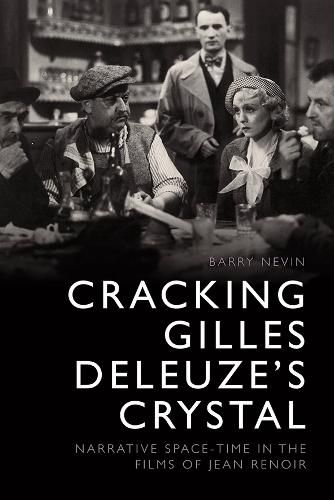
Jean Renoir is widely considered as one of the most important technical innovators and politically engaged filmmakers in cinema history. Reassessing the unique qualities of Renoir’s influential visual style by interpreting his films through Gilles Deleuze’s film philosophy, and through previously unpublished production files, Barry Nevin provides a fresh and accessible interdisciplinary perspective that illuminates both the consistency and diversity of Renoir’s oeuvre. Exploring canonised landmarks in Renoir’s career, including La Grande Illusion (1937) and La Regle du jeu (1939), the book also considers neglected films such as Le Bled (1929) and Diary of a Chambermaid (1946) to present a rounded analysis of this quintessential French auteur’s oeuvre.
$9.00 standard shipping within Australia
FREE standard shipping within Australia for orders over $100.00
Express & International shipping calculated at checkout
Stock availability can be subject to change without notice. We recommend calling the shop or contacting our online team to check availability of low stock items. Please see our Shopping Online page for more details.
Jean Renoir is widely considered as one of the most important technical innovators and politically engaged filmmakers in cinema history. Reassessing the unique qualities of Renoir’s influential visual style by interpreting his films through Gilles Deleuze’s film philosophy, and through previously unpublished production files, Barry Nevin provides a fresh and accessible interdisciplinary perspective that illuminates both the consistency and diversity of Renoir’s oeuvre. Exploring canonised landmarks in Renoir’s career, including La Grande Illusion (1937) and La Regle du jeu (1939), the book also considers neglected films such as Le Bled (1929) and Diary of a Chambermaid (1946) to present a rounded analysis of this quintessential French auteur’s oeuvre.
Search our extensive online catalogue.
