Readings Newsletter
Become a Readings Member to make your shopping experience even easier.
Sign in or sign up for free!
You’re not far away from qualifying for FREE standard shipping within Australia
You’ve qualified for FREE standard shipping within Australia
The cart is loading…


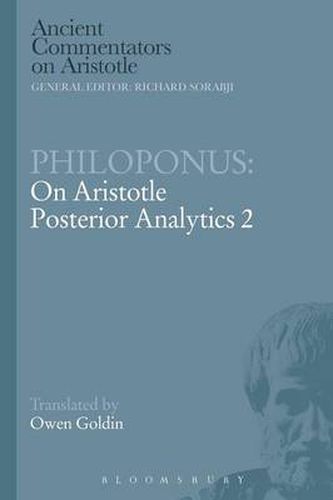
The Posterior Analytics contains Aristotle’s philosophy of science. In Book 2, Aristotle asks how the scientist discovers what sort of loss of light constitutes lunar eclipse. The scientist has to discover that the moon’s darkening is due to the earth’s shadow. Once that defining explanation is known the scientist possesses the full scientific concept of lunar eclipse and can use it to explain other necessary features of the phenomenon. The present commentary, arguably ascribed to Philoponus incorrectly, offers some interpretations of Aristotle that are unfamiliar nowadays. For example, the scientific concept of a human is acquired from observing particular humans and repeatedly receiving impressions in the sense image or percept and later in the imagination. The impressions received are not only of particular distinctive characteristics, like paleness, but also of universal human characteristics, like rationality. Perception can thus in a sense apprehend universal qualities in the individual as well as particular ones. This volume contains an English translation of the commentary, accompanied by extensive commentary notes, an introduction and a bibliography.
$9.00 standard shipping within Australia
FREE standard shipping within Australia for orders over $100.00
Express & International shipping calculated at checkout
Stock availability can be subject to change without notice. We recommend calling the shop or contacting our online team to check availability of low stock items. Please see our Shopping Online page for more details.
The Posterior Analytics contains Aristotle’s philosophy of science. In Book 2, Aristotle asks how the scientist discovers what sort of loss of light constitutes lunar eclipse. The scientist has to discover that the moon’s darkening is due to the earth’s shadow. Once that defining explanation is known the scientist possesses the full scientific concept of lunar eclipse and can use it to explain other necessary features of the phenomenon. The present commentary, arguably ascribed to Philoponus incorrectly, offers some interpretations of Aristotle that are unfamiliar nowadays. For example, the scientific concept of a human is acquired from observing particular humans and repeatedly receiving impressions in the sense image or percept and later in the imagination. The impressions received are not only of particular distinctive characteristics, like paleness, but also of universal human characteristics, like rationality. Perception can thus in a sense apprehend universal qualities in the individual as well as particular ones. This volume contains an English translation of the commentary, accompanied by extensive commentary notes, an introduction and a bibliography.
Search our extensive online catalogue.
