Readings Newsletter
Become a Readings Member to make your shopping experience even easier.
Sign in or sign up for free!
You’re not far away from qualifying for FREE standard shipping within Australia
You’ve qualified for FREE standard shipping within Australia
The cart is loading…


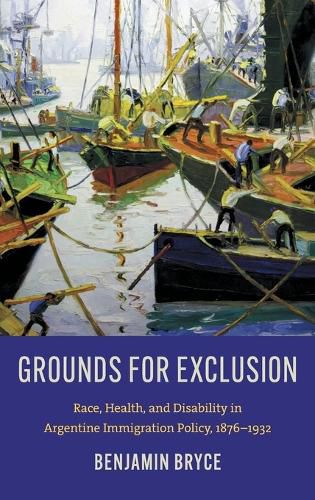
Argentina has been one the most important destinations for international labor migrants in the modern world. But while it was long imagined as a nation of immigrants, a closer look at its history and policies reveals that the country's doors were only open to certain people. In the late nineteenth and early twentieth centuries, officials developed a long list of grounds for exclusion that deterred many people from ever boarding a ship to the country. Travelers who did come to Argentina were frequently barred at ports of entry on account of race, health, or disability.
Tracing the attempts of European, Asian, and Middle Eastern migrants to enter Argentina, Benjamin Bryce shows how the modern state worked to privilege white supremacy and expansion over diversity and magnanimity. As Argentine officials, politicians, and influential thinkers envisioned their country's future, they tried to define the ideal citizens who would live, work, vote, and reproduce in Argentina-and the characteristics of those who would not. Anyone deemed unhealthy or disabled was labeled unproductive or a potential burden on the state. Race often shaped notions of health and productivity and therefore determined who was welcome. Bryce's thorough analysis of immigration exclusions reconceptualizes Argentina's long-accepted reputation as a haven for newcomers.
$9.00 standard shipping within Australia
FREE standard shipping within Australia for orders over $100.00
Express & International shipping calculated at checkout
Stock availability can be subject to change without notice. We recommend calling the shop or contacting our online team to check availability of low stock items. Please see our Shopping Online page for more details.
Argentina has been one the most important destinations for international labor migrants in the modern world. But while it was long imagined as a nation of immigrants, a closer look at its history and policies reveals that the country's doors were only open to certain people. In the late nineteenth and early twentieth centuries, officials developed a long list of grounds for exclusion that deterred many people from ever boarding a ship to the country. Travelers who did come to Argentina were frequently barred at ports of entry on account of race, health, or disability.
Tracing the attempts of European, Asian, and Middle Eastern migrants to enter Argentina, Benjamin Bryce shows how the modern state worked to privilege white supremacy and expansion over diversity and magnanimity. As Argentine officials, politicians, and influential thinkers envisioned their country's future, they tried to define the ideal citizens who would live, work, vote, and reproduce in Argentina-and the characteristics of those who would not. Anyone deemed unhealthy or disabled was labeled unproductive or a potential burden on the state. Race often shaped notions of health and productivity and therefore determined who was welcome. Bryce's thorough analysis of immigration exclusions reconceptualizes Argentina's long-accepted reputation as a haven for newcomers.
Search our extensive online catalogue.
