Readings Newsletter
Become a Readings Member to make your shopping experience even easier.
Sign in or sign up for free!
You’re not far away from qualifying for FREE standard shipping within Australia
You’ve qualified for FREE standard shipping within Australia
The cart is loading…


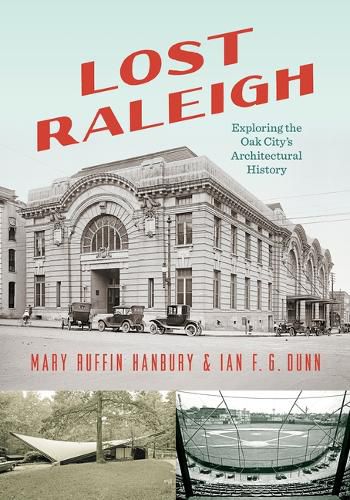
Landmarks with great historical, architectural, and cultural value are often demolished in the name of progress, leaving little but memories behind. In the growing city of Raleigh, many important buildings have been razed, but even when no longer present, these landmarks hold histories that can help us understand not only what Raleigh used to look like but what kind of place Raleigh used to be.
Mary Ruffin Hanbury and Ian F. G. Dunn, building on the work of the late Karl Larson, have gathered photographs and stories of Raleigh landmarks from the late eighteenth century to the late twentieth century, including private homes, public and educational buildings, parks, malls, churches, and businesses. Among these noteworthy places are the home of controversial newspaper editor Josephus Daniels; the nineteenth-century municipal building Metropolitan Hall; and the famous Eduardo Catalano house. Full of photos and fascinating stories, Lost Raleigh is a comprehensive look at the city's cultural and architectural past and a plea to protect and preserve the landmarks that make our cities unique, connecting us to our shared history.
$9.00 standard shipping within Australia
FREE standard shipping within Australia for orders over $100.00
Express & International shipping calculated at checkout
Stock availability can be subject to change without notice. We recommend calling the shop or contacting our online team to check availability of low stock items. Please see our Shopping Online page for more details.
Landmarks with great historical, architectural, and cultural value are often demolished in the name of progress, leaving little but memories behind. In the growing city of Raleigh, many important buildings have been razed, but even when no longer present, these landmarks hold histories that can help us understand not only what Raleigh used to look like but what kind of place Raleigh used to be.
Mary Ruffin Hanbury and Ian F. G. Dunn, building on the work of the late Karl Larson, have gathered photographs and stories of Raleigh landmarks from the late eighteenth century to the late twentieth century, including private homes, public and educational buildings, parks, malls, churches, and businesses. Among these noteworthy places are the home of controversial newspaper editor Josephus Daniels; the nineteenth-century municipal building Metropolitan Hall; and the famous Eduardo Catalano house. Full of photos and fascinating stories, Lost Raleigh is a comprehensive look at the city's cultural and architectural past and a plea to protect and preserve the landmarks that make our cities unique, connecting us to our shared history.
Search our extensive online catalogue.
