Readings Newsletter
Become a Readings Member to make your shopping experience even easier.
Sign in or sign up for free!
You’re not far away from qualifying for FREE standard shipping within Australia
You’ve qualified for FREE standard shipping within Australia
The cart is loading…


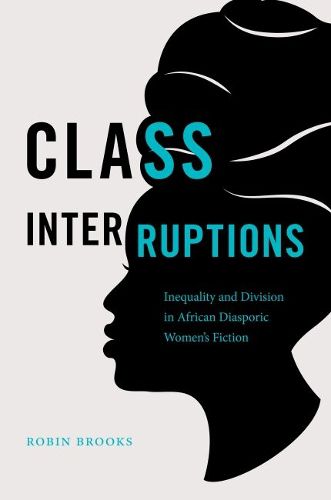
As downward mobility continues to be an international issue, Robin Brooks offers a timely intervention between the humanities and social sciences by examining how Black women’s cultural production engages debates about the growth in income and wealth gaps in global society during the late twentieth- and early twenty-first centuries. Using an interdisciplinary approach, this innovative book employs major contemporary texts by both African American and Caribbean writers-Toni Morrison, Gloria Naylor, Dawn Turner, Olive Senior, Oonya Kempadoo, Merle Hodge, and Diana McCaulay-to demonstrate how neoliberalism, within the broader framework of racial capitalism, reframes structural inequalities as personal failures, thus obscuring how to improve unjust conditions.
Through interviews with authors, textual analyses of the fiction, and a diagramming of cross-class relationships, Brooks offers compelling new insight on literary portrayals of class inequalities and division. She expands the scope of how the Black women’s literary tradition, since the 1970s, has been conceptualized by repositioning the importance of class and explores why the imagination matters as we think about novel ways to address long-standing and simultaneously evolving issues.
$9.00 standard shipping within Australia
FREE standard shipping within Australia for orders over $100.00
Express & International shipping calculated at checkout
Stock availability can be subject to change without notice. We recommend calling the shop or contacting our online team to check availability of low stock items. Please see our Shopping Online page for more details.
As downward mobility continues to be an international issue, Robin Brooks offers a timely intervention between the humanities and social sciences by examining how Black women’s cultural production engages debates about the growth in income and wealth gaps in global society during the late twentieth- and early twenty-first centuries. Using an interdisciplinary approach, this innovative book employs major contemporary texts by both African American and Caribbean writers-Toni Morrison, Gloria Naylor, Dawn Turner, Olive Senior, Oonya Kempadoo, Merle Hodge, and Diana McCaulay-to demonstrate how neoliberalism, within the broader framework of racial capitalism, reframes structural inequalities as personal failures, thus obscuring how to improve unjust conditions.
Through interviews with authors, textual analyses of the fiction, and a diagramming of cross-class relationships, Brooks offers compelling new insight on literary portrayals of class inequalities and division. She expands the scope of how the Black women’s literary tradition, since the 1970s, has been conceptualized by repositioning the importance of class and explores why the imagination matters as we think about novel ways to address long-standing and simultaneously evolving issues.
Search our extensive online catalogue.
