Readings Newsletter
Become a Readings Member to make your shopping experience even easier.
Sign in or sign up for free!
You’re not far away from qualifying for FREE standard shipping within Australia
You’ve qualified for FREE standard shipping within Australia
The cart is loading…


This title is printed to order. This book may have been self-published. If so, we cannot guarantee the quality of the content. In the main most books will have gone through the editing process however some may not. We therefore suggest that you be aware of this before ordering this book. If in doubt check either the author or publisher’s details as we are unable to accept any returns unless they are faulty. Please contact us if you have any questions.
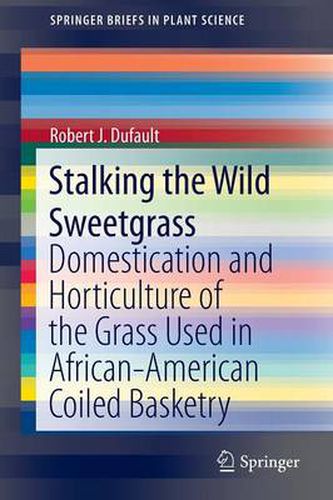
Stalking the Wild Sweetgrass: Domestication and Horticulture of the Grass Used in African-American Coiled Basketry is concerned with the historical domestication of sweetgrass, the main construction/structural grass used in the three century old African-American tradition of coiled basketry in South Carolina. During the plantation era in southern agriculture, sweetgrass baskets were made for post-harvest processing and storage of rice by enslaved Africans from Lower Cape Fear, North Carolina to northern Florida. Enslaved Africans from the Rice Kingdom in Africa were prized for the basketry and rice agronomic skills and were specially sought by slavery traders. Today, this ancient craft still thrives in the community of Mt. Pleasant, South Carolina.
Authored by one of the most renowned experts in the field and filled with illuminating color photographs, this volume provides knowledge of the horticulture of an extremely important wild plant and an example of the perils of plant- and people-based research and experimentation. As one of the few authoritative texts on the subject, Stalking the Wild Sweetgrass: Domestication and Horticulture of the Grass Used in African-American Coiled Basketry is a resourceful volume on wild sweetgrass, suitable for researchers and students alike.
$9.00 standard shipping within Australia
FREE standard shipping within Australia for orders over $100.00
Express & International shipping calculated at checkout
Stock availability can be subject to change without notice. We recommend calling the shop or contacting our online team to check availability of low stock items. Please see our Shopping Online page for more details.
This title is printed to order. This book may have been self-published. If so, we cannot guarantee the quality of the content. In the main most books will have gone through the editing process however some may not. We therefore suggest that you be aware of this before ordering this book. If in doubt check either the author or publisher’s details as we are unable to accept any returns unless they are faulty. Please contact us if you have any questions.
Stalking the Wild Sweetgrass: Domestication and Horticulture of the Grass Used in African-American Coiled Basketry is concerned with the historical domestication of sweetgrass, the main construction/structural grass used in the three century old African-American tradition of coiled basketry in South Carolina. During the plantation era in southern agriculture, sweetgrass baskets were made for post-harvest processing and storage of rice by enslaved Africans from Lower Cape Fear, North Carolina to northern Florida. Enslaved Africans from the Rice Kingdom in Africa were prized for the basketry and rice agronomic skills and were specially sought by slavery traders. Today, this ancient craft still thrives in the community of Mt. Pleasant, South Carolina.
Authored by one of the most renowned experts in the field and filled with illuminating color photographs, this volume provides knowledge of the horticulture of an extremely important wild plant and an example of the perils of plant- and people-based research and experimentation. As one of the few authoritative texts on the subject, Stalking the Wild Sweetgrass: Domestication and Horticulture of the Grass Used in African-American Coiled Basketry is a resourceful volume on wild sweetgrass, suitable for researchers and students alike.
Search our extensive online catalogue.
