Readings Newsletter
Become a Readings Member to make your shopping experience even easier.
Sign in or sign up for free!
You’re not far away from qualifying for FREE standard shipping within Australia
You’ve qualified for FREE standard shipping within Australia
The cart is loading…


This title is printed to order. This book may have been self-published. If so, we cannot guarantee the quality of the content. In the main most books will have gone through the editing process however some may not. We therefore suggest that you be aware of this before ordering this book. If in doubt check either the author or publisher’s details as we are unable to accept any returns unless they are faulty. Please contact us if you have any questions.
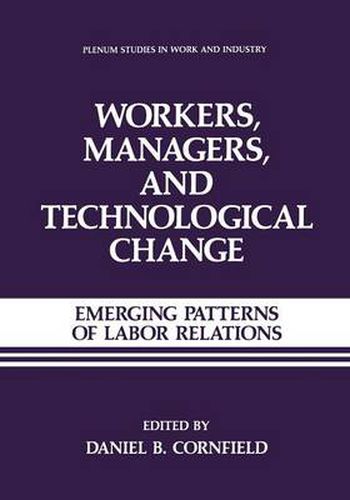
Workers, Managers, and Technological Change: Emerging Patterns of Labor Relations contributes significantly to an important subject. Technological change is one of the most powerful forces transforming the American industrial relations In fact, the synergistic relationships between technology and indus system. trial relations are so complex that they are not well or completely understood. We know that the impact of technology, while not independent of social forces, already has been profound: it has transformed occupations, creating new skills and destroying others; altered the power relationships between workers and managers; and changed the way workers learn and work. Tech nology also has made it possible to decentralize some economic activities out of large metropolitan areas and into small towns, rural areas, and other coun tries. Most important, information technology makes it possible for interna tional corporations to operate on a global basis. Indeed, some international corporations, especially those based in the United States, are losing their national identities, detaching the welfare of corporations from that of particu lar workers and communities. Internationalization, facilitated by information technology, has trans formed industrial relations systems. A major objective of the traditional American industrial relations system was to take labor out of competition.
$9.00 standard shipping within Australia
FREE standard shipping within Australia for orders over $100.00
Express & International shipping calculated at checkout
Stock availability can be subject to change without notice. We recommend calling the shop or contacting our online team to check availability of low stock items. Please see our Shopping Online page for more details.
This title is printed to order. This book may have been self-published. If so, we cannot guarantee the quality of the content. In the main most books will have gone through the editing process however some may not. We therefore suggest that you be aware of this before ordering this book. If in doubt check either the author or publisher’s details as we are unable to accept any returns unless they are faulty. Please contact us if you have any questions.
Workers, Managers, and Technological Change: Emerging Patterns of Labor Relations contributes significantly to an important subject. Technological change is one of the most powerful forces transforming the American industrial relations In fact, the synergistic relationships between technology and indus system. trial relations are so complex that they are not well or completely understood. We know that the impact of technology, while not independent of social forces, already has been profound: it has transformed occupations, creating new skills and destroying others; altered the power relationships between workers and managers; and changed the way workers learn and work. Tech nology also has made it possible to decentralize some economic activities out of large metropolitan areas and into small towns, rural areas, and other coun tries. Most important, information technology makes it possible for interna tional corporations to operate on a global basis. Indeed, some international corporations, especially those based in the United States, are losing their national identities, detaching the welfare of corporations from that of particu lar workers and communities. Internationalization, facilitated by information technology, has trans formed industrial relations systems. A major objective of the traditional American industrial relations system was to take labor out of competition.
Search our extensive online catalogue.
