Readings Newsletter
Become a Readings Member to make your shopping experience even easier.
Sign in or sign up for free!
You’re not far away from qualifying for FREE standard shipping within Australia
You’ve qualified for FREE standard shipping within Australia
The cart is loading…


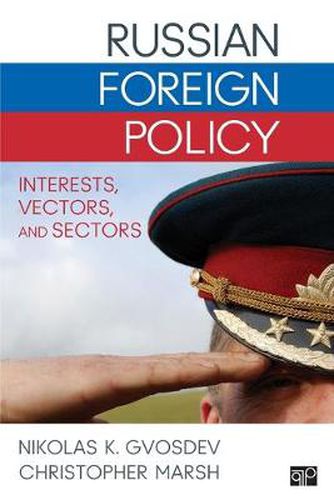
In a truly contemporary analysis of Moscow’s relations with its neighbors and other strategic international actors, Gvosdev and Marsh use a comprehensive vectors approach, dividing the world into eight geographic zones. Each vector chapter looks at the dynamics of key bilateral relationships while highlighting major topical issues-oil and energy, defense policy, economic policy, the role of international institutions, and the impact of major interest groups or influencers-demonstrating that Russia formulates multiple, sometimes contrasting, foreign policies. Providing rich historical context as well as exposure to the scholarly literature, the authors offer an incisive look at how and why Russia partners with some states while it counter-balances others.
$9.00 standard shipping within Australia
FREE standard shipping within Australia for orders over $100.00
Express & International shipping calculated at checkout
Stock availability can be subject to change without notice. We recommend calling the shop or contacting our online team to check availability of low stock items. Please see our Shopping Online page for more details.
In a truly contemporary analysis of Moscow’s relations with its neighbors and other strategic international actors, Gvosdev and Marsh use a comprehensive vectors approach, dividing the world into eight geographic zones. Each vector chapter looks at the dynamics of key bilateral relationships while highlighting major topical issues-oil and energy, defense policy, economic policy, the role of international institutions, and the impact of major interest groups or influencers-demonstrating that Russia formulates multiple, sometimes contrasting, foreign policies. Providing rich historical context as well as exposure to the scholarly literature, the authors offer an incisive look at how and why Russia partners with some states while it counter-balances others.
Search our extensive online catalogue.
