Readings Newsletter
Become a Readings Member to make your shopping experience even easier.
Sign in or sign up for free!
You’re not far away from qualifying for FREE standard shipping within Australia
You’ve qualified for FREE standard shipping within Australia
The cart is loading…


This title is printed to order. This book may have been self-published. If so, we cannot guarantee the quality of the content. In the main most books will have gone through the editing process however some may not. We therefore suggest that you be aware of this before ordering this book. If in doubt check either the author or publisher’s details as we are unable to accept any returns unless they are faulty. Please contact us if you have any questions.
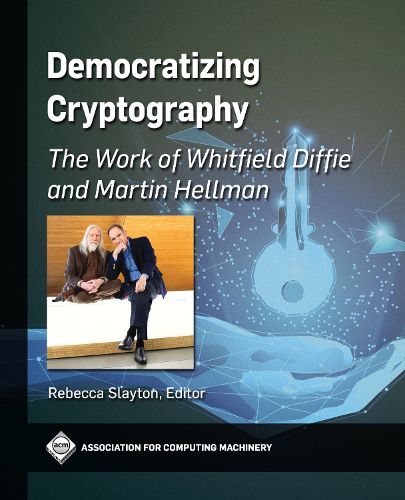
In the mid-1970s, Whitfield Diffie and Martin Hellman invented public key cryptography, an innovation that ultimately changed the world. Today public key cryptography provides the primary basis for secure communication over the internet, enabling online work, socializing, shopping, government services, and much more.
While other books have documented the development of public key cryptography, this is the first to provide a comprehensive insiders’ perspective on the full impacts of public key cryptography, including six original chapters by nine distinguished scholars. The book begins with an original joint biography of the lives and careers of Diffie and Hellman, highlighting parallels and intersections, and contextualizing their work. Subsequent chapters show how public key cryptography helped establish an open cryptography community and made lasting impacts on computer and network security, theoretical computer science, mathematics, public policy, and society. The volume includes particularly influential articles by Diffie and Hellman, as well as newly transcribed interviews and Turing Award Lectures by both Diffie and Hellman.
The contributed chapters provide new insights that are accessible to a wide range of readers, from computer science students and computer security professionals, to historians of technology and members of the general public. The chapters can be readily integrated into undergraduate and graduate courses on a range of topics, including computer security, theoretical computer science and mathematics, the history of computing, and science and technology policy.
$9.00 standard shipping within Australia
FREE standard shipping within Australia for orders over $100.00
Express & International shipping calculated at checkout
Stock availability can be subject to change without notice. We recommend calling the shop or contacting our online team to check availability of low stock items. Please see our Shopping Online page for more details.
This title is printed to order. This book may have been self-published. If so, we cannot guarantee the quality of the content. In the main most books will have gone through the editing process however some may not. We therefore suggest that you be aware of this before ordering this book. If in doubt check either the author or publisher’s details as we are unable to accept any returns unless they are faulty. Please contact us if you have any questions.
In the mid-1970s, Whitfield Diffie and Martin Hellman invented public key cryptography, an innovation that ultimately changed the world. Today public key cryptography provides the primary basis for secure communication over the internet, enabling online work, socializing, shopping, government services, and much more.
While other books have documented the development of public key cryptography, this is the first to provide a comprehensive insiders’ perspective on the full impacts of public key cryptography, including six original chapters by nine distinguished scholars. The book begins with an original joint biography of the lives and careers of Diffie and Hellman, highlighting parallels and intersections, and contextualizing their work. Subsequent chapters show how public key cryptography helped establish an open cryptography community and made lasting impacts on computer and network security, theoretical computer science, mathematics, public policy, and society. The volume includes particularly influential articles by Diffie and Hellman, as well as newly transcribed interviews and Turing Award Lectures by both Diffie and Hellman.
The contributed chapters provide new insights that are accessible to a wide range of readers, from computer science students and computer security professionals, to historians of technology and members of the general public. The chapters can be readily integrated into undergraduate and graduate courses on a range of topics, including computer security, theoretical computer science and mathematics, the history of computing, and science and technology policy.
Search our extensive online catalogue.
