Readings Newsletter
Become a Readings Member to make your shopping experience even easier.
Sign in or sign up for free!
You’re not far away from qualifying for FREE standard shipping within Australia
You’ve qualified for FREE standard shipping within Australia
The cart is loading…


This title is printed to order. This book may have been self-published. If so, we cannot guarantee the quality of the content. In the main most books will have gone through the editing process however some may not. We therefore suggest that you be aware of this before ordering this book. If in doubt check either the author or publisher’s details as we are unable to accept any returns unless they are faulty. Please contact us if you have any questions.
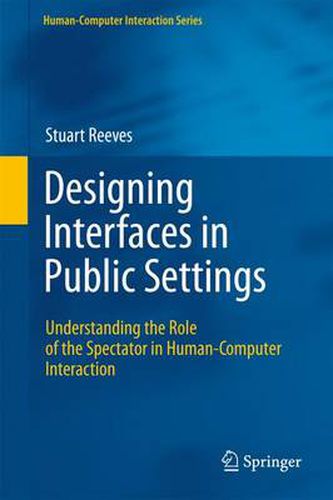
Interaction with computers is becoming an increasingly ubiquitous and public affair. With more and more interactive digital systems being deployed in places such as museums, city streets and performance venues, understanding how to design for them is becoming ever more pertinent. Crafting interactions for these public settings raises a host of new challenges for human-computer interaction, widening the focus of design from concern about an individual’s dialogue with an interface to also consider the ways in which interaction affects and is affected by spectators and bystanders.
Designing Interfaces in Public Settings takes a performative perspective on interaction, exploring a series of empirical studies of technology at work in public performance environments. From interactive storytelling to mobile devices on city streets, from digital telemetry systems on fairground rides to augmented reality installation interactive, the book documents the design issues emerging from the changing role of technology as it pushes out into our everyday lives.
Building a design framework from these studies and the growing body of literature examining public technologies, this book provides a new perspective for understanding human-computer interaction. Mapping out this new and challenging design space, Designing Interfaces in Public Settings offers both conceptual understandings and practical strategies for interaction design practitioners, artists working with technology, and computer scientists.
$9.00 standard shipping within Australia
FREE standard shipping within Australia for orders over $100.00
Express & International shipping calculated at checkout
Stock availability can be subject to change without notice. We recommend calling the shop or contacting our online team to check availability of low stock items. Please see our Shopping Online page for more details.
This title is printed to order. This book may have been self-published. If so, we cannot guarantee the quality of the content. In the main most books will have gone through the editing process however some may not. We therefore suggest that you be aware of this before ordering this book. If in doubt check either the author or publisher’s details as we are unable to accept any returns unless they are faulty. Please contact us if you have any questions.
Interaction with computers is becoming an increasingly ubiquitous and public affair. With more and more interactive digital systems being deployed in places such as museums, city streets and performance venues, understanding how to design for them is becoming ever more pertinent. Crafting interactions for these public settings raises a host of new challenges for human-computer interaction, widening the focus of design from concern about an individual’s dialogue with an interface to also consider the ways in which interaction affects and is affected by spectators and bystanders.
Designing Interfaces in Public Settings takes a performative perspective on interaction, exploring a series of empirical studies of technology at work in public performance environments. From interactive storytelling to mobile devices on city streets, from digital telemetry systems on fairground rides to augmented reality installation interactive, the book documents the design issues emerging from the changing role of technology as it pushes out into our everyday lives.
Building a design framework from these studies and the growing body of literature examining public technologies, this book provides a new perspective for understanding human-computer interaction. Mapping out this new and challenging design space, Designing Interfaces in Public Settings offers both conceptual understandings and practical strategies for interaction design practitioners, artists working with technology, and computer scientists.
Search our extensive online catalogue.
