Readings Newsletter
Become a Readings Member to make your shopping experience even easier.
Sign in or sign up for free!
You’re not far away from qualifying for FREE standard shipping within Australia
You’ve qualified for FREE standard shipping within Australia
The cart is loading…


This title is printed to order. This book may have been self-published. If so, we cannot guarantee the quality of the content. In the main most books will have gone through the editing process however some may not. We therefore suggest that you be aware of this before ordering this book. If in doubt check either the author or publisher’s details as we are unable to accept any returns unless they are faulty. Please contact us if you have any questions.
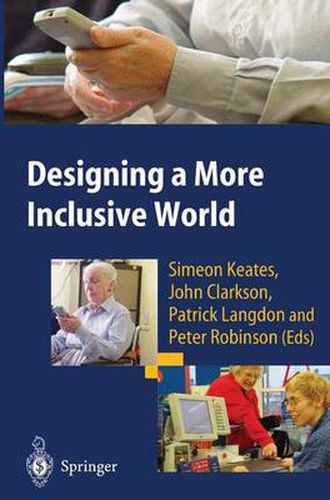
Designing inclusively is no longer an option for companies. It is a business essential. Global populations are getting older, legislation is increasingly prohibitive of unnecessary exclusion and consumer attitudes are beginning to change. Exclusivity is out, inclusivity is in. Research communities the world over are responding to this change in design emphasis. Conferences such as the Cambridge Workshops on Universal Access and Assistive Technology (CWUAAT) offer a forum for researchers from diverse and varied disciplines to bring their perspectives on inclusive design together. This book has been inspired by the second CWUAAT, held in Cambridge, England in March 2004. It contains chapters from an international group of leading researchers in this field. Contributions focus on the following topics: design issues for universal access and assistive technology; enabling computer access and new technologies; and, assistive technology and rehabilitation robotics. This series of conferences is aimed at a broad range of interests, with a general focus on the development of products and solutions. Numerous case studies are used to raise awareness of the challenges faced in developing truly inclusive products, along with examples of good practice for design for a more inclusive world.
$9.00 standard shipping within Australia
FREE standard shipping within Australia for orders over $100.00
Express & International shipping calculated at checkout
Stock availability can be subject to change without notice. We recommend calling the shop or contacting our online team to check availability of low stock items. Please see our Shopping Online page for more details.
This title is printed to order. This book may have been self-published. If so, we cannot guarantee the quality of the content. In the main most books will have gone through the editing process however some may not. We therefore suggest that you be aware of this before ordering this book. If in doubt check either the author or publisher’s details as we are unable to accept any returns unless they are faulty. Please contact us if you have any questions.
Designing inclusively is no longer an option for companies. It is a business essential. Global populations are getting older, legislation is increasingly prohibitive of unnecessary exclusion and consumer attitudes are beginning to change. Exclusivity is out, inclusivity is in. Research communities the world over are responding to this change in design emphasis. Conferences such as the Cambridge Workshops on Universal Access and Assistive Technology (CWUAAT) offer a forum for researchers from diverse and varied disciplines to bring their perspectives on inclusive design together. This book has been inspired by the second CWUAAT, held in Cambridge, England in March 2004. It contains chapters from an international group of leading researchers in this field. Contributions focus on the following topics: design issues for universal access and assistive technology; enabling computer access and new technologies; and, assistive technology and rehabilitation robotics. This series of conferences is aimed at a broad range of interests, with a general focus on the development of products and solutions. Numerous case studies are used to raise awareness of the challenges faced in developing truly inclusive products, along with examples of good practice for design for a more inclusive world.
Search our extensive online catalogue.
