Readings Newsletter
Become a Readings Member to make your shopping experience even easier.
Sign in or sign up for free!
You’re not far away from qualifying for FREE standard shipping within Australia
You’ve qualified for FREE standard shipping within Australia
The cart is loading…


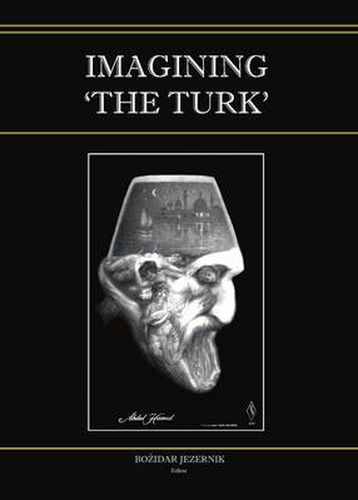
A human being is a symbolic creature and, to the same extent, an active inventor of otherness. Europe and Turkey, The West and the Balkans, are infinitely exploitable symbols. Any symbol, inherently polysemic and socially construed, is continuously contested and negotiated. The image of ‘the Turk’ as a ruthless plunderer is still vivid in European collective memory. Although it occasionally still verges on ethnic mythology, it clearly belongs to a past where, along with the plague and famine, this name used to be mentioned in prayers more frequently than that of God itself. In the past, the name ‘Turk’ implied the negative of the European self-image. ‘The Turk,’ assuming the role of the ‘defining other,’ was considered as everything a European was not (primitive, barbarian, savage vs. civilised). As such, this concept was one of the constitutive elements of European (Western) cultural identity. The aim of this book is nothing less than a better understanding of the European past related to the Ottomans. An intellectual traveller who takes his Orient Express at Victoria, however, will have to get off somewhere half-way and spend some time in the part of Europe set between the Alps and the Adriatic before ending his journey in Istanbul.
$9.00 standard shipping within Australia
FREE standard shipping within Australia for orders over $100.00
Express & International shipping calculated at checkout
Stock availability can be subject to change without notice. We recommend calling the shop or contacting our online team to check availability of low stock items. Please see our Shopping Online page for more details.
A human being is a symbolic creature and, to the same extent, an active inventor of otherness. Europe and Turkey, The West and the Balkans, are infinitely exploitable symbols. Any symbol, inherently polysemic and socially construed, is continuously contested and negotiated. The image of ‘the Turk’ as a ruthless plunderer is still vivid in European collective memory. Although it occasionally still verges on ethnic mythology, it clearly belongs to a past where, along with the plague and famine, this name used to be mentioned in prayers more frequently than that of God itself. In the past, the name ‘Turk’ implied the negative of the European self-image. ‘The Turk,’ assuming the role of the ‘defining other,’ was considered as everything a European was not (primitive, barbarian, savage vs. civilised). As such, this concept was one of the constitutive elements of European (Western) cultural identity. The aim of this book is nothing less than a better understanding of the European past related to the Ottomans. An intellectual traveller who takes his Orient Express at Victoria, however, will have to get off somewhere half-way and spend some time in the part of Europe set between the Alps and the Adriatic before ending his journey in Istanbul.
Search our extensive online catalogue.
