Readings Newsletter
Become a Readings Member to make your shopping experience even easier.
Sign in or sign up for free!
You’re not far away from qualifying for FREE standard shipping within Australia
You’ve qualified for FREE standard shipping within Australia
The cart is loading…


This title is printed to order. This book may have been self-published. If so, we cannot guarantee the quality of the content. In the main most books will have gone through the editing process however some may not. We therefore suggest that you be aware of this before ordering this book. If in doubt check either the author or publisher’s details as we are unable to accept any returns unless they are faulty. Please contact us if you have any questions.
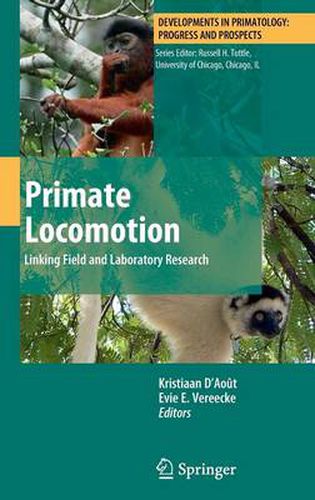
Primate locomotion has typically been studied from two points of view. Laboratory-based researchers have focused on aspects like biomechanics and energetics, whereas field-based researchers have focused on (locomotor) behaviour and ecology. Unfortunately, to date, there is relatively little scientific exchange between both groups. With a book, which will be the result of a symposium on the 2008 Meeting of the International Primatological Society in Edinburgh, we would like to bring together laboratory and field-based primate locomotion studies. We are convinced this will be beneficial for both research lines. For example, biomechanists might wonder how frequently the locomotor style they study in the lab actually occurs in nature, and field workers might use calculated costs of locomotion to understand why certain locomotor behaviours are favoured under specific conditions. Thus, on the one hand, an established link between both groups may help interpret the results by using each other’s findings. On the other hand, recent technological advances (e.g. portable high-speed cameras) make it possible to bridge the gap between lab-based and field-based research by actually collecting biomechanical data in situ. Again, communication between both groups is necessary to identify the specific needs and start up achievable and successful research projects in the field. In order to generate a wide interest, we have invited biomechanists, ecologists, and field-based researchers who combine both disciplines, and we hope their combined contributions will facilitate lasting cooperation between the mentioned disciplines and stimulate innovative research in Primatology.
We are convinced that the most appropriate format to publish the different symposium contributions is a conference volume within an existing book series. Firstly, the chapters will not only contain new data but will also review existing data and elaborate on potential future work - more so than can be done in a journal article.
Secondly, the combination of chapters will form an entity that is more valuable than the sum of the separate chapters and therefore they need to be presented together. Lastly, this volume will benefit from the typically long shelf life of a book in a renowned series, allowing it to be used as reference book for both researchers and students.
$9.00 standard shipping within Australia
FREE standard shipping within Australia for orders over $100.00
Express & International shipping calculated at checkout
Stock availability can be subject to change without notice. We recommend calling the shop or contacting our online team to check availability of low stock items. Please see our Shopping Online page for more details.
This title is printed to order. This book may have been self-published. If so, we cannot guarantee the quality of the content. In the main most books will have gone through the editing process however some may not. We therefore suggest that you be aware of this before ordering this book. If in doubt check either the author or publisher’s details as we are unable to accept any returns unless they are faulty. Please contact us if you have any questions.
Primate locomotion has typically been studied from two points of view. Laboratory-based researchers have focused on aspects like biomechanics and energetics, whereas field-based researchers have focused on (locomotor) behaviour and ecology. Unfortunately, to date, there is relatively little scientific exchange between both groups. With a book, which will be the result of a symposium on the 2008 Meeting of the International Primatological Society in Edinburgh, we would like to bring together laboratory and field-based primate locomotion studies. We are convinced this will be beneficial for both research lines. For example, biomechanists might wonder how frequently the locomotor style they study in the lab actually occurs in nature, and field workers might use calculated costs of locomotion to understand why certain locomotor behaviours are favoured under specific conditions. Thus, on the one hand, an established link between both groups may help interpret the results by using each other’s findings. On the other hand, recent technological advances (e.g. portable high-speed cameras) make it possible to bridge the gap between lab-based and field-based research by actually collecting biomechanical data in situ. Again, communication between both groups is necessary to identify the specific needs and start up achievable and successful research projects in the field. In order to generate a wide interest, we have invited biomechanists, ecologists, and field-based researchers who combine both disciplines, and we hope their combined contributions will facilitate lasting cooperation between the mentioned disciplines and stimulate innovative research in Primatology.
We are convinced that the most appropriate format to publish the different symposium contributions is a conference volume within an existing book series. Firstly, the chapters will not only contain new data but will also review existing data and elaborate on potential future work - more so than can be done in a journal article.
Secondly, the combination of chapters will form an entity that is more valuable than the sum of the separate chapters and therefore they need to be presented together. Lastly, this volume will benefit from the typically long shelf life of a book in a renowned series, allowing it to be used as reference book for both researchers and students.
Search our extensive online catalogue.
