Readings Newsletter
Become a Readings Member to make your shopping experience even easier.
Sign in or sign up for free!
You’re not far away from qualifying for FREE standard shipping within Australia
You’ve qualified for FREE standard shipping within Australia
The cart is loading…


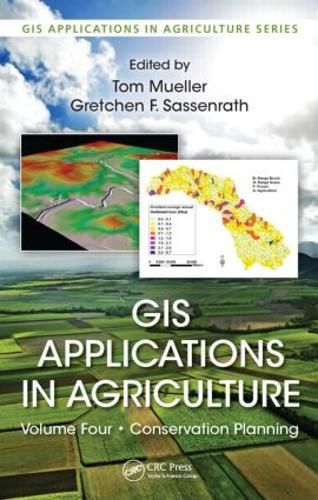
Conservation planning involves targeted management practices and land use decision-making based on careful analysis of landscape limitations in order to protect soil and water resources. Developing solutions to conservation planning is of worldwide interest due to anticipated population growth, growing demand of feedstocks for biofuels, decreasing freshwater resources, and increasing land degradation in the developed world. Recent advances in geospatial technologies now provide land managers with tools and resources to conserve soil and water resources more efficiently than has ever been possible before.
GIS Applications in Agriculture, Volume 4: Conservation Planning presents approaches developed by leading researchers working at the intersection of conservation and spatial technologies. Among others, the technologies include global positioning systems (GPS), geographic information systems (GIS), Internet mapping technologies, remote sensing, and various modeling applications. These advances allow improved prediction of soil erosion and environmental effects, better prioritization of land for conservation initiatives and funding, and enhanced prediction of the impact of management practices on natural resources. They also facilitate the development of conservation management plans and improve the accessibility of conservation knowledge and tools.
The strategies presented are designed to provide the greatest benefit to preserving natural resources while reducing economic expenses. Each chapter includes a detailed background on the specific topic, with case studies describing the design and implementation of the solution. Readers are guided through step-by-step exercises to gain experience in executing the conservation practice. Substantial online data and modeling are available that can be immediately implemented or modified to suit users’ needs. The exercises are accessible enough to be used in the classroom, yet detailed enough for self-instruction by highly motivated professionals active in developing conservation plans.
$9.00 standard shipping within Australia
FREE standard shipping within Australia for orders over $100.00
Express & International shipping calculated at checkout
Stock availability can be subject to change without notice. We recommend calling the shop or contacting our online team to check availability of low stock items. Please see our Shopping Online page for more details.
Conservation planning involves targeted management practices and land use decision-making based on careful analysis of landscape limitations in order to protect soil and water resources. Developing solutions to conservation planning is of worldwide interest due to anticipated population growth, growing demand of feedstocks for biofuels, decreasing freshwater resources, and increasing land degradation in the developed world. Recent advances in geospatial technologies now provide land managers with tools and resources to conserve soil and water resources more efficiently than has ever been possible before.
GIS Applications in Agriculture, Volume 4: Conservation Planning presents approaches developed by leading researchers working at the intersection of conservation and spatial technologies. Among others, the technologies include global positioning systems (GPS), geographic information systems (GIS), Internet mapping technologies, remote sensing, and various modeling applications. These advances allow improved prediction of soil erosion and environmental effects, better prioritization of land for conservation initiatives and funding, and enhanced prediction of the impact of management practices on natural resources. They also facilitate the development of conservation management plans and improve the accessibility of conservation knowledge and tools.
The strategies presented are designed to provide the greatest benefit to preserving natural resources while reducing economic expenses. Each chapter includes a detailed background on the specific topic, with case studies describing the design and implementation of the solution. Readers are guided through step-by-step exercises to gain experience in executing the conservation practice. Substantial online data and modeling are available that can be immediately implemented or modified to suit users’ needs. The exercises are accessible enough to be used in the classroom, yet detailed enough for self-instruction by highly motivated professionals active in developing conservation plans.
Search our extensive online catalogue.
